
Churn Survey and Cancellation Survey Questions (With Examples)
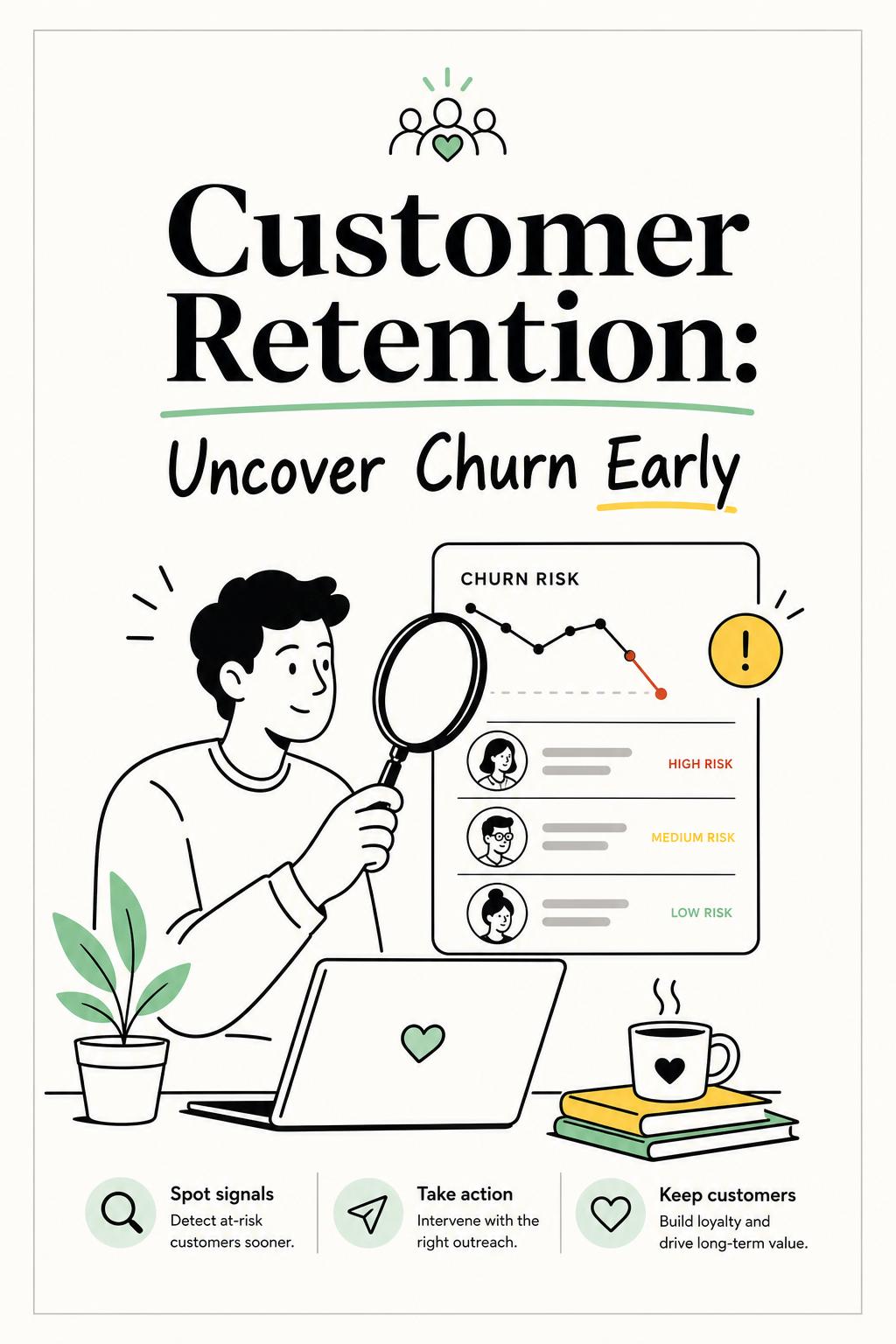
A churn survey asks why a customer is leaving, or why they might. A cancellation survey is the form in the cancel flow. Most of them ask for a label. Price. Missing features. No longer needed. The label is easy to count and hard to act on.
The questions below are for a churn survey you send before someone cancels, and for a cancellation survey you show as they leave. They ask what the person was trying to do, what broke, and what they would switch to. A score does not do that.
Why most churn survey questions fail
The default approach—sending periodic satisfaction surveys—fails because it measures the wrong thing at the wrong time. Satisfaction is often lagging, vague, and disconnected from real retention drivers.
Here’s what goes wrong in practice:
- Teams ask broad, low-signal questions like “How satisfied are you?” instead of diagnosing specific retention risks.
- Surveys are sent on a schedule (quarterly, biannually) rather than triggered by meaningful behavior changes.
- Responses aren’t tied to actual product usage, so insights lack context.
I worked with a SaaS company that ran quarterly surveys across enterprise accounts. Satisfaction scores were stable. But when we layered in product analytics, we found that weekly active usage had dropped 27% in their highest-value segment. The survey didn’t catch it because no one asked about workflow dependence or declining usage habits. Three months later, churn followed exactly where usage had already collapsed.
Retention risk doesn’t show up as dissatisfaction first. It shows up as disengagement.
What a churn survey should measure
If you want your customer retention survey questions to actually predict churn, they need to map to the underlying mechanics of why customers stay or leave.
- Value realization: Are customers getting the outcome they expected?
- Workflow dependence: Is your product embedded in recurring behavior?
- Friction accumulation: Are small issues compounding into frustration?
- Switching momentum: Are customers already considering alternatives?
This framework forces you to move beyond sentiment and into diagnosis. Each layer represents a failure point that can independently drive churn—even if the others are healthy.
Churn survey and cancellation survey questions
You don’t need more questions. You need sharper ones. These are designed to uncover real retention signals, not surface-level opinions.
Value realization questions
- What outcome were you expecting when you chose our product?
- How close are you to achieving that outcome today?
- What measurable impact has our product had on your team?
- What expected benefit hasn’t materialized yet?
- If our product disappeared tomorrow, what would break or slow down?
These questions reveal expectation gaps. And expectation gaps—not dissatisfaction—are one of the strongest predictors of churn.
Workflow dependence questions
- How frequently does your team rely on our product each week?
- Which roles depend on it most in their daily work?
- Where in your workflow is our product essential versus optional?
- When do users switch to other tools instead?
- What tasks feel repetitive or harder than they should?
In one project, I interviewed operations teams who claimed a tool was “critical.” But when we mapped actual usage, only one person used it consistently. Everyone else relied on exports and side processes. The product wasn’t embedded—it was orbiting the workflow. That account churned despite positive survey scores.
Friction and hidden pain questions
- What’s the most frustrating part of using the product right now?
- What issues has your team adapted to instead of reporting?
- Where does the product slow you down, even slightly?
- How confident are you in the product during high-stakes moments?
- What do new users struggle with most?
Most teams underestimate how dangerous “minor” issues are. In a retention study I ran, the biggest churn driver wasn’t major bugs—it was accumulated uncertainty. Users didn’t fully trust outputs, so they double-checked everything. That extra effort eroded perceived value over time.
Switching and churn risk questions
- How likely are you to evaluate alternatives in the next 6 months?
- What would trigger you to seriously consider switching?
- Has anyone internally questioned renewing or expanding?
- If budgets tightened, how easily could you reduce usage?
- What would another tool need to do better to replace us?
- Who internally is advocating for or against our product?
These questions are uncomfortable—but that’s the point. If you don’t surface switching intent early, you’ll only hear about it when it’s too late to act.
When to send a churn survey
The biggest unlock in retention research isn’t just better questions—it’s better timing.
This is where most teams fall short—they rely on static surveys instead of dynamic, behavior-triggered research.
Tools like Usercall make this significantly more effective by allowing teams to intercept users at critical product moments and run AI-moderated interviews tied directly to behavioral signals. Instead of guessing why usage dropped, you can ask immediately—and analyze responses at scale with research-grade qualitative depth.
How to read cancellation survey answers
Counting averages won’t help you reduce churn. You need to identify patterns that signal structural weakness.
Focus on these patterns:
- Expectation gaps: Customers didn’t achieve what they thought they would.
- Partial adoption: Only subsets of the team rely on the product.
- Workaround dependency: Customers use the product—but with added friction.
- Weak internal advocacy: No strong champion defending renewal.
- Budget vulnerability: Value isn’t strong enough to survive cost scrutiny.
I once led a churn analysis where everything pointed to pricing as the issue. But after digging into open-ended survey responses, the real problem emerged: customers couldn’t easily communicate ROI internally. The product delivered value—but it wasn’t visible enough. We redesigned reporting and onboarding to highlight early wins. Churn dropped within two quarters. The issue wasn’t cost—it was proof.
How to run a cancellation survey
If your team struggles to turn insights into action, use this workflow:
- Define a specific risk hypothesis. Example: declining usage = weak habit formation.
- Trigger surveys based on behavior. Not calendar schedules.
- Ask 4–6 targeted questions. Prioritize depth over volume.
- Segment responses by role and usage patterns.
- Translate insights into interventions. Product, onboarding, or messaging changes.
Retention research only matters if it leads to action. Otherwise, it’s just documentation of decline.
Churn survey questions that hide the reason
If your goal is to reduce churn, these questions are largely noise on their own:
- How satisfied are you?
- How likely are you to recommend us?
- How would you rate your experience overall?
They aren’t useless—but they’re incomplete. They describe sentiment, not stability.
What a cancellation survey is for
Customer retention survey questions should do one thing well: reveal whether the relationship is strengthening or quietly breaking.
That means understanding not just whether customers like your product—but whether they rely on it, trust it, defend it internally, and struggle to replace it.
Because churn is rarely sudden. It’s usually a slow drift—one that the right questions can detect long before the contract ends.
A cancellation survey asks for a written answer after the decision, and people who have already left often will not fill it in or agree to an interview. The better moment is when a churn signal shows up: engagement drop-off, fewer logins, a downgrade, a failed payment, a cancel page visit, or a low NPS score. Teams who connect their stack (webhook, Intercom, HTTP, or SDK) can invite those customers to a short interview in the moment, and keep the survey for anyone who will still type an answer. Talk to customers before they churn.
If you want the interviews done for you, that is the churn diagnostic sprint.
Surveys can flag risk, but only real conversations explain why it's happening — that's where exit interviews come in. Read our full breakdown of Customer Exit Interviews: How to Run Them (Questions + Examples) to see how to pair both approaches, or try Usercall to turn at-risk signals into actionable conversations automatically.
Related: Churn Analysis: How to Find Out Why Customers Churn (Before They Cancel) · Churn Analysis: How to Find Out Why Customers Churn (Before They Cancel)