
 Table of Contents
I once watched a support team celebrate a 92% CSAT score the same week their churn rate spiked. No one thought those two things were connected. The survey said customers were happy. The revenue said they weren’t. When we dug in, the issue was obvious: the survey measured politeness and speed, not whether customers actually got what they needed. That gap is where most customer service surveys quietly fail.
If you are searching for sample customer service survey questions, you probably don’t need more questions—you need better ones. The kind that expose what’s actually broken in your support experience, not just how friendly your agents sound.
Because here’s the uncomfortable truth: most customer service surveys are designed to produce reassuring numbers, not operational insight.
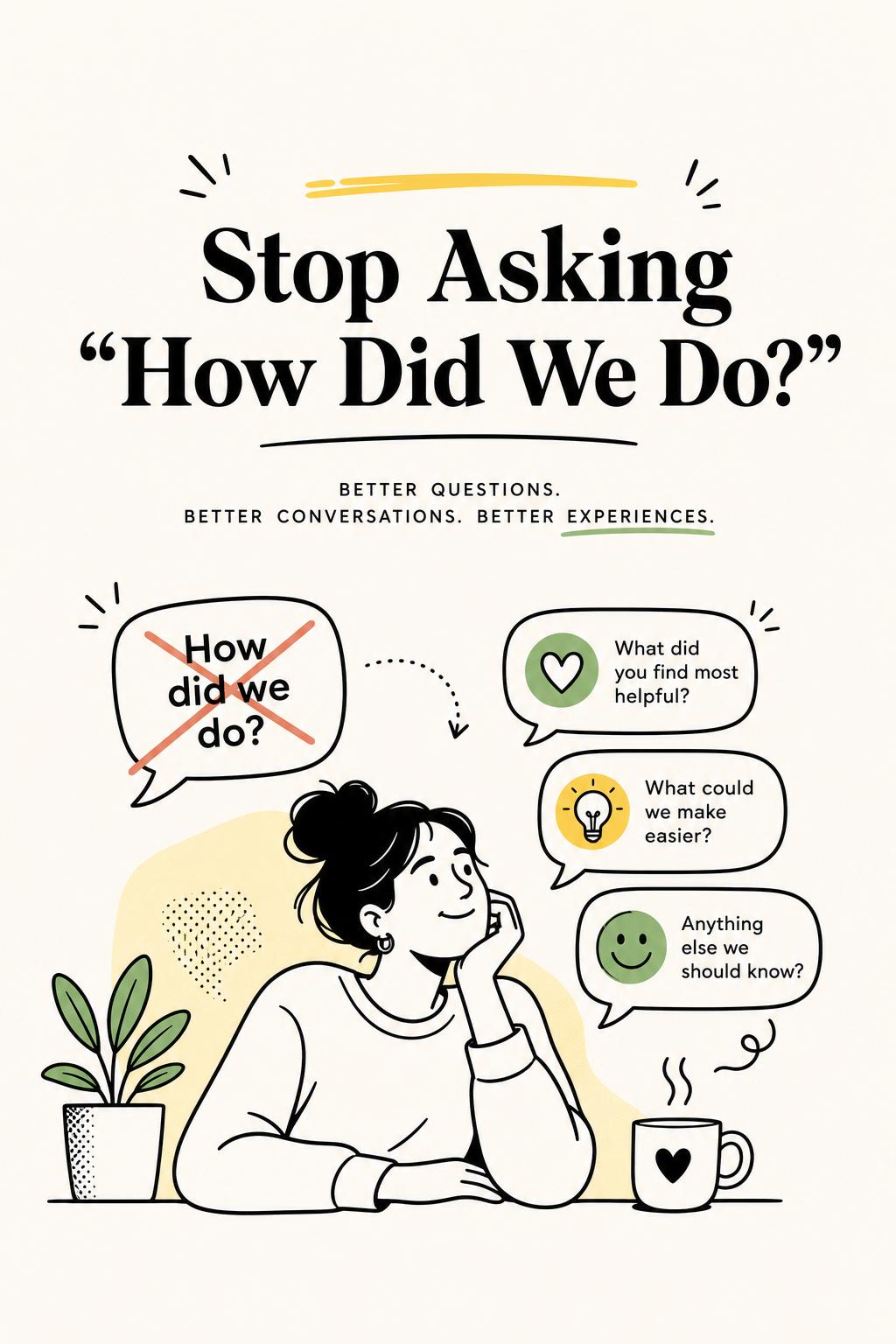
The default survey playbook is flawed. Teams ask broad, generic questions like “How satisfied were you?” and assume the answers will somehow translate into action. They rarely do.
Here’s why that approach breaks down in practice:
I’ve seen teams spend months debating whether a 7.8 CSAT is “good enough” instead of asking a more useful question: what specifically made this experience harder than it should have been?
Every effective customer service survey I’ve designed comes back to four things. If your questions don’t map to these, you’re collecting noise.
This framework forces clarity. It separates “the agent was nice” from “the problem is fixed” from “this process is broken.” Most surveys collapse all three into a single number—and that’s exactly why they fail.
These questions cut through the illusion of satisfaction. Resolution is the single strongest predictor of whether support actually worked.
Effort is where hidden pain lives. In one B2B SaaS study I led, customers described support as “fine but exhausting.” CSAT didn’t flag a problem. Effort questions revealed repeated context switching across three teams. Fixing that reduced ticket volume by 18%.
These are useful—but overused. Most teams default here because it’s easier to coach agents than fix systems. That’s a mistake. Many bad experiences are caused by policy constraints, not people.
This is where you’ll find leverage. These questions surface internal inefficiencies customers are forced to absorb.
Support data is product feedback in disguise. If customers consistently contact support for the same issue, your product or documentation is failing upstream.
Trust is what remains after things go wrong. Fast responses don’t build trust—credible, transparent resolution does.
When teams push for shorter surveys (they always do), I recommend this minimum viable set:
This combination consistently outperforms standalone CSAT because it gives you outcome, friction, and explanation.
In a fintech project I worked on, adding just that third open-ended question uncovered a major issue: refund approvals required unnecessary escalation. CSAT alone never revealed it. Within six weeks of fixing the process, negative feedback dropped by 32%.
Most teams treat timing as an afterthought. It shouldn’t be.
If you only survey immediately, you’ll overestimate success. Customers often realize later that the fix didn’t hold.
The most advanced teams go further by triggering feedback at behavioral moments, not just after tickets. Tools like UserCall enable this by combining AI-moderated interviews with research-grade qualitative analysis, allowing you to intercept users at key product moments—like repeated errors or drop-offs—and understand the “why” behind support demand. That’s how you connect customer service feedback to actual product and business outcomes.
Collecting feedback is easy. Making it useful is where teams fail.
Here’s the workflow I use with product and support teams:
Think of it as a signal stack:
Scores show that something happened.
Comments explain what happened.
Behavioral data reveals why it happened.
If you stop at scores, you’re managing perception. If you connect all three, you’re improving reality.
I once worked with a company where support feedback kept mentioning “confusing setup.” Nothing in support workflows explained it. When we connected survey responses to product analytics, we found users repeatedly failing at one onboarding step before contacting support. Fixing that single screen reduced support tickets by 22%.
The goal of customer service survey questions isn’t to prove your team is doing a good job. It’s to identify where customers are doing extra work your company should have handled.
That work might come from unclear product design, rigid policies, poor internal systems, or broken communication between teams. But unless your survey is designed to expose those issues, you’ll keep collecting polite, misleading feedback.
So if you take one thing from this: stop asking customers to rate your service. Start asking them to reveal your friction.
Because the companies that win on customer experience aren’t the ones with the highest scores. They’re the ones that actually understand what those scores are hiding—and fix it.
Want more question examples mapped to specific stages and use cases? Our pillar guide on customer satisfaction survey questions covers 50+ examples with guidance on what each answer means. For surveys that dig deeper automatically instead of just collecting a score, see how Usercall runs these conversations at scale.
Related: 27 customer service questions that expose customer frustration · 21 customer service questions that reveal what CSAT hides · a full customer service survey questionnaire template
