
Stop Personalizing Like a Marketer: The Real Way to Deliver a Personalized Customer Experience
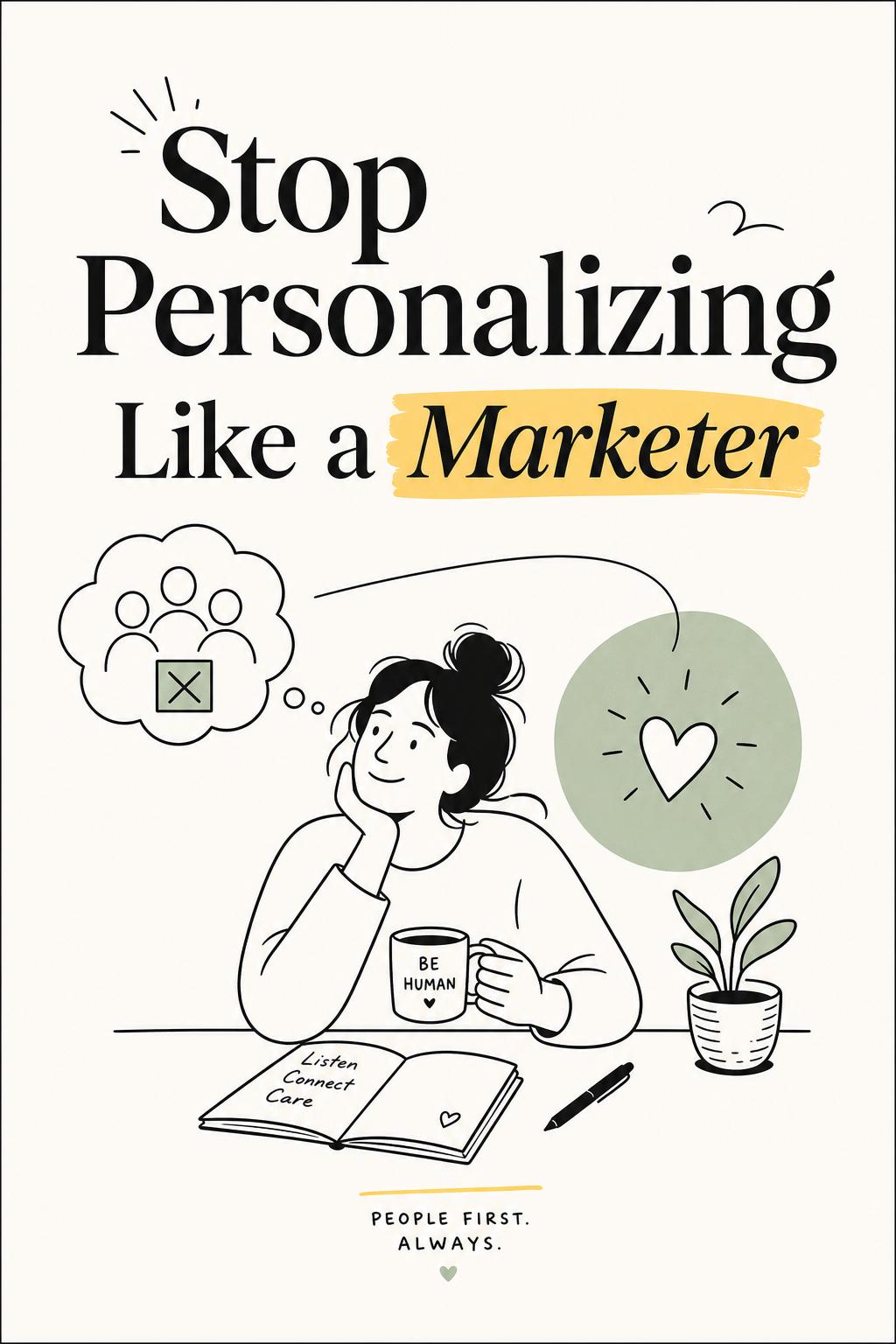
I once sat in a growth review where a team proudly presented their “personalized customer experience” strategy: 12 audience segments, 40+ message variants, and a machine learning model deciding what each user should see. It looked sophisticated. It also didn’t work. Conversion moved by less than 2%, and churn stayed exactly where it was.
When we actually spoke to customers, the problem became obvious within a week. No one felt understood. The experience wasn’t wrong—it was irrelevant. The personalization was technically accurate but contextually useless.
This is the uncomfortable truth most teams avoid: personalization doesn’t fail because of bad tooling. It fails because companies personalize based on what they can measure, not what customers are actually trying to solve. And those are rarely the same thing.
The myth of personalization (and why it keeps underperforming)
Search for “personalized customer experience” and you’ll get the same advice everywhere: segment your users, track behavior, tailor messaging, automate journeys. None of that is wrong. It’s just incomplete—and often misleading in practice.
The dominant approach treats personalization as a targeting problem. But customers don’t experience targeting. They experience friction, uncertainty, and progress.
Here’s where most strategies break down:
- Segments are too blunt to reflect real intent. “New vs returning” or “enterprise vs SMB” says almost nothing about what a user needs in a specific moment.
- Behavioral data is over-interpreted. A click, revisit, or drop-off gets treated as intent, when it’s often confusion, doubt, or misalignment.
- Personalization is applied to messaging, not decisions. Teams tweak headlines instead of helping users choose, evaluate, or move forward.
- Short-term metrics distort success. A higher click rate can hide a worse experience if users feel pushed rather than helped.
I’ve seen teams spend quarters refining personalization logic while ignoring the core issue: they never validated whether their assumptions about user intent were correct.
What a personalized customer experience actually feels like
Customers don’t think in terms of personalization. They think in terms of effort and clarity. A personalized experience feels like the product is reducing both.
In dozens of interviews across SaaS, fintech, and marketplaces, three patterns consistently show up when personalization works:
- It removes unnecessary decisions. Instead of more options, users get the right next step.
- It adapts to situational context. The experience reflects what the user is trying to do now—not what they did last month.
- It signals understanding without overreach. It’s helpful, not creepy or overconfident.
Notice what’s missing: demographics, personas, and most traditional segmentation. Those are internal constructs. Customers care about whether you understand their situation.
The shift that changes everything: from personas to moments
If your personalization strategy isn’t working, don’t add more segments. Change the unit of analysis.
The most effective teams personalize around customer moments, not customer types.
A moment is defined by a user trying to accomplish something under specific constraints. It’s where intent, friction, and context collide.
Here’s the framework I use with product and research teams:
- Trigger: What behavior or event signals a meaningful moment?
- Goal: What is the user trying to get done right now?
- Friction: What’s slowing them down or creating doubt?
- Intervention: What would actually help them move forward?
- Validation: How do we know this improved their experience, not just the metric?
This model forces a different kind of personalization. Instead of asking “who is this user?”, you ask “what does this moment require?”
That shift is where most gains come from.
Why analytics alone will mislead your personalization strategy
Analytics is essential—but dangerously incomplete when used alone.
It tells you what happened. It rarely tells you why it mattered.
Take a common example: a user visits your pricing page three times in a week. Most systems interpret this as high intent and trigger aggressive conversion tactics.
In reality, I’ve seen at least four completely different interpretations in research:
- They’re ready to buy but need internal justification.
- They’re confused about plan differences.
- They think it’s too expensive and are looking for confirmation.
- They’re evaluating whether to expand usage internally.
Same behavior. Radically different needs. One-size personalization fails all but one.
This is where most teams hit a wall—and where better tooling changes the game.
Tools like Usercall allow you to intercept users at these exact moments and run AI-moderated interviews with real depth. Instead of guessing why someone revisited pricing or dropped off onboarding, you capture structured qualitative insight in context. That’s the missing layer most personalization strategies lack: understanding the decision behind the behavior.
Without that, you’re optimizing blind.
A practical workflow to build personalization that actually works
This is the system I’ve used across multiple product teams to turn underperforming personalization into measurable impact.
1. Focus on high-friction moments, not the entire journey
Most teams overextend. They try to personalize everything and end up improving nothing.
Start with moments where user uncertainty directly impacts revenue or retention:
- Pricing evaluation
- Onboarding drop-offs
- First-time feature adoption
- Upgrade or downgrade decisions
These are leverage points. Small improvements here outperform broad optimizations elsewhere.
2. Capture in-the-moment qualitative insight
This is the step most teams skip—and the reason most personalization fails.
In one onboarding study, we intercepted users who abandoned a setup step (about 38% of new signups). The team assumed the issue was complexity.
It wasn’t.
Users were worried about making the wrong choice and not being able to undo it. The friction wasn’t effort—it was risk perception.
We changed the experience to emphasize reversibility and added a “preview before committing” step. Completion rates increased by 21%.
That insight would never come from analytics alone.
3. Design interventions around decision friction
Once you understand the moment, don’t personalize content—personalize support.
Ask: what does the user need to move forward?
- Confidence? Show social proof or validation.
- Clarity? Simplify comparisons or recommend a default.
- Speed? Remove steps or pre-fill inputs.
- Control? Add flexibility or reversibility.
This is where most personalization efforts fall short—they optimize presentation instead of progress.
4. Measure the right outcome
Clicks and conversions are not enough.
You need to know whether the experience actually felt better.
In a pricing experiment I worked on, a more aggressive personalized CTA increased clicks by 14%—but also increased refund requests within 30 days. The experience pushed users forward without resolving their doubts.
That’s not personalization. That’s pressure.
5. Keep personalization explainable
If your team can’t explain why a user saw a specific experience, your system is too complex.
Opaque personalization logic leads to accumulation of bad assumptions. The best systems are not just effective—they are debuggable.
Where most personalization efforts quietly break
Pricing pages
Teams default to sales-driven personalization. But most users at this stage want clarity, not pressure.
Better approach: guide decision-making with relevant comparisons, realistic use cases, and clear tradeoffs.
Onboarding
Role-based personalization dominates here—and underperforms.
In practice, readiness matters more than role. Some users want speed. Others want reassurance. Treating them the same creates friction for both.
Retention
Usage-based triggers miss emotional context.
A drop in activity could mean success, confusion, or disengagement. Without understanding which, your outreach risks being irrelevant—or worse, annoying.
What good personalization actually looks like in practice
The best personalized customer experiences are subtle and precise. They don’t try to impress—they try to help.
“You’ve compared three plans. Most teams at this point are choosing between flexibility and simplicity. If your priority is getting started quickly, this plan fits best. If you need more control later, here’s what changes.”
This works because it reflects a real decision. It reduces effort. It doesn’t pretend to know everything—it just knows what matters now.
I’ve seen this outperform far more complex systems because it aligns with how users actually think.
The real competitive advantage: understanding, not targeting
Most companies are still stuck in a surface-level version of personalization. More segments, more rules, more automation.
But the teams that win are doing something different: they are building systems to continuously understand customer moments and adapt to them.
That requires tighter loops between behavior and qualitative insight. It requires accepting that dashboards are incomplete. And it requires designing personalization as a form of decision support—not marketing optimization.
Because in the end, a personalized customer experience isn’t about showing the right message.
It’s about making the customer feel like the product understands what they’re trying to do—and actually helps them do it.
Most companies aren’t close.
Which is exactly why this is still such a powerful opportunity.
Run the week on concept testing: 15 to 30 AI-moderated interviews, with quotes back in 48 to 72 hours.
Real personalization only works when it's built on a solid CX foundation, not just segmentation tricks. For a broader look at how to structure your approach, see our customer experience CX strategy guide, and if you want to start capturing the qualitative insight that makes personalization actually work, try Usercall.
Related: Concept testing questions · Concept testing research · CPG packaging · Concept testing examples
Related: the 5 moments that decide whether customers stay or leave · why customers leave after a good experience · a CX framework that actually drives retention