
 Table of Contents
I’ve walked into “high-performing” retail stores that looked perfect on paper—strong foot traffic, solid conversion rates, positive NPS—and watched customers quietly struggle, hesitate, and abandon decisions in real time. That disconnect is the core problem with how most companies approach retail store experience. They measure outcomes, not experiences. And by the time those outcomes show up in dashboards, the damage is already done.
The uncomfortable truth: most retail store experience strategies are built on lagging indicators and surface-level feedback. They tell you what happened, not why it happened. And if you don’t understand why customers hesitate, second-guess, or disengage inside your store, you are optimizing blind.
From years of running qualitative research in physical retail environments, I can tell you this with confidence: the biggest opportunities are not in attracting more customers. They are in fixing the invisible friction that stops customers from doing what they already came to do.
Most teams treat retail store experience as a set of visible attributes: store design, merchandising, staff friendliness, cleanliness, and queue times. Those matter—but they are not the experience itself. The real experience is cognitive and emotional. It lives in the customer’s head as they try to complete a task.
Can I figure out where to go? Can I compare options without confusion? Can I trust what I’m seeing? Can I get help without effort? Can I finish this without friction?
That’s the experience. And most companies don’t measure it.
Instead, they rely on proxies that feel actionable but miss the point entirely:
These metrics are not useless—but they are incomplete. They flatten the experience into something that looks manageable but isn’t explainable.
Through repeated studies across categories—electronics, apparel, home goods, grocery—the same pattern shows up. Customers don’t leave because the store was “bad.” They leave because something felt harder than it should have.
Retail experience is driven by three underlying forces:
Most retail environments accidentally increase all three.
I once worked with a consumer electronics retailer convinced their issue was “low staff engagement.” But when we ran in-the-moment intercept interviews, a different story emerged. Customers weren’t avoiding staff—they were trying to avoid needing them. Product displays forced questions instead of answering them. Specs were inconsistent. Comparisons were unclear.
Staff became a crutch for poor experience design.
Once we reframed the problem, the solution shifted from “train staff better” to “reduce dependency on staff.” That meant clearer comparison frameworks, better labeling, and structured decision aids. Conversion didn’t just improve—returns dropped because customers felt more confident in their choices.
Here’s the core failure: most retail research captures memory, not behavior.
Ask a customer about their store visit an hour later, and you’ll get a simplified story. Ask them in the exact moment they’re struggling to decide, and you’ll get the truth.
Those are not the same thing.
Post-visit surveys tend to over-index on:
They miss the micro-frictions that shape behavior:
In one apparel study, post-visit surveys suggested strong satisfaction. But in-store intercepts revealed customers frequently abandoned secondary purchases because they couldn’t quickly understand sizing differences across styles. That never showed up in top-line metrics—but it directly impacted basket size.
If you’re not capturing experience at the moment it happens, you are missing the most actionable insights.
If you want to fix retail experience, you need to move from store-level thinking to journey-level thinking.
I use a simple but effective framework in nearly every retail study:
This framework forces specificity. It turns vague feedback like “hard to navigate” into something actionable:
Customers on a time-constrained mission failed to locate key categories within 30 seconds, leading to aisle backtracking and reduced browsing depth.
That is a solvable problem. And more importantly, it’s measurable.
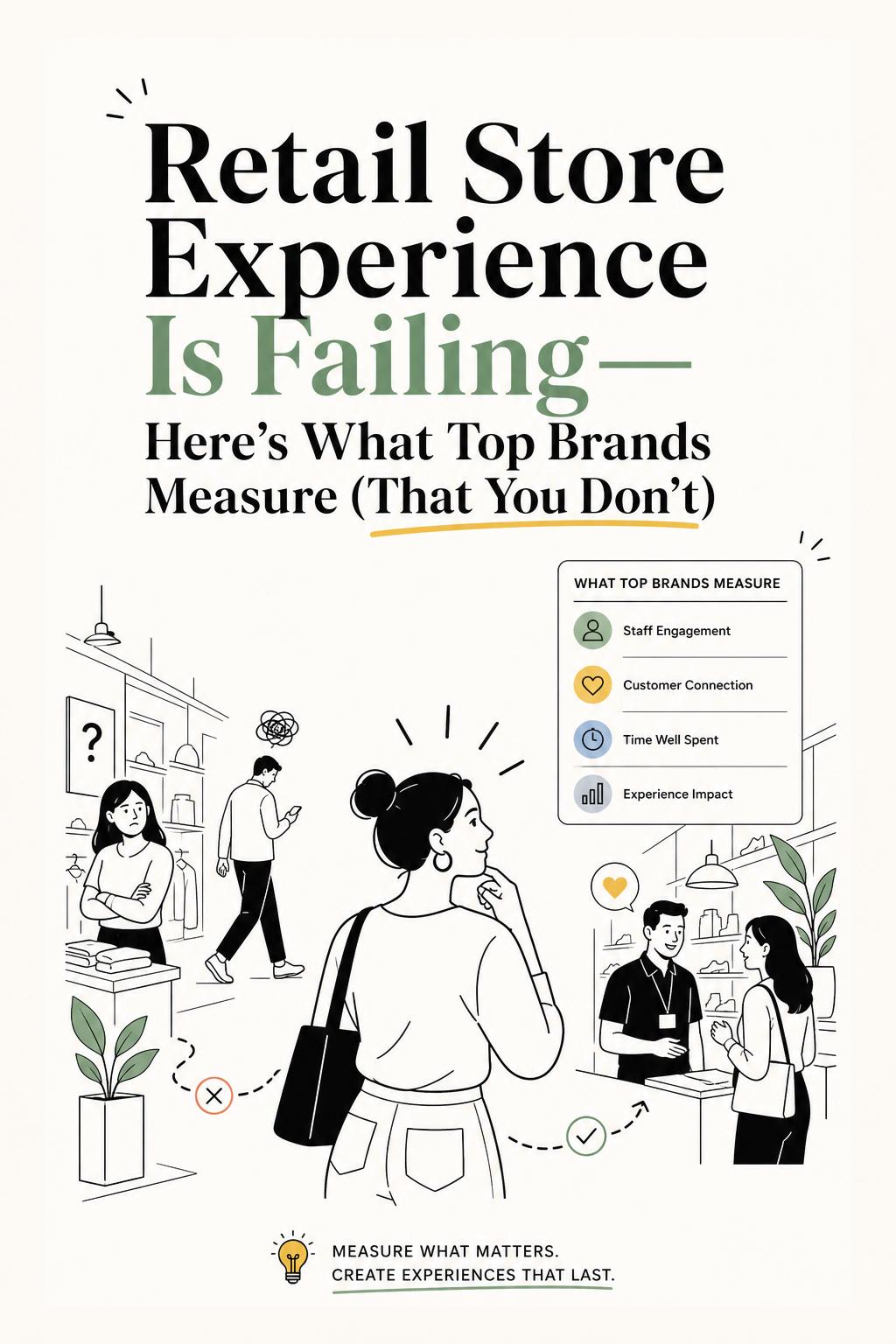
The best retail teams I’ve worked with don’t just track outcomes—they track experience signals that predict outcomes.
Here’s what that looks like in practice:
These metrics are harder to collect—but they directly explain performance.
One grocery client discovered that reducing “time to orientation” by just 15 seconds increased basket size by 8% in high-traffic locations. Not because customers bought more intentionally—but because they had more cognitive bandwidth to browse.
Retail environments are messy, fast-moving, and highly variable. Traditional research methods struggle to keep up. That’s where newer AI-powered approaches are starting to change the game—if used correctly.
The key is not automation for speed. It’s precision at scale.
When evaluating tools for retail experience research:
The advantage is not just faster research. It’s better timing. You’re no longer asking customers to remember what happened—you’re capturing it as it happens.
Retail teams often chase efficiency: faster checkout, shorter visits, quicker decisions. But speed is not always the goal.
In categories like fashion or home goods, slowing down the experience can increase engagement and spend—if that time is meaningful. The problem is when time is wasted, not when it’s spent.
I’ve seen teams aggressively reduce dwell time, only to hurt discovery and emotional engagement. I’ve also seen teams ignore long dwell times that were actually signals of confusion.
Same metric. Opposite meaning.
The right question is not “how fast is the experience?” It’s “is the time spent valuable or wasted?”
Improving retail experience is not about big redesigns. It’s about systematically removing friction from high-impact moments.
A practical workflow:
This is where most companies fail—they jump from insight to rollout without controlled testing. Retail environments are too complex for that.
A good retail store experience is not one customers describe as “pleasant.” That bar is too low. The real standard is this:
Customers can complete their mission with minimal friction and maximum confidence—and the experience feels easier than they expected.
If your current metrics can’t explain where customers lose confidence, where they hesitate, and why they leave value on the table, then you’re not managing experience—you’re observing outcomes.
The brands that win in retail are not the ones with the nicest stores. They are the ones that understand customer behavior at the moment it matters—and design for it.
Foot traffic and conversion rate only tell part of the story—the friction points that make or break in-store confidence are usually invisible in your reports. See how this connects to broader journey mapping mistakes in Your Customer Experience Journey Map Is Probably a Work of Fiction, then use Usercall to talk directly to shoppers and uncover what's actually driving their decisions.
Related: why customer experience journey maps get conversions wrong · fixing the client experience journey
