
How Did You Hear About Us Survey: The DTC Brand Guide
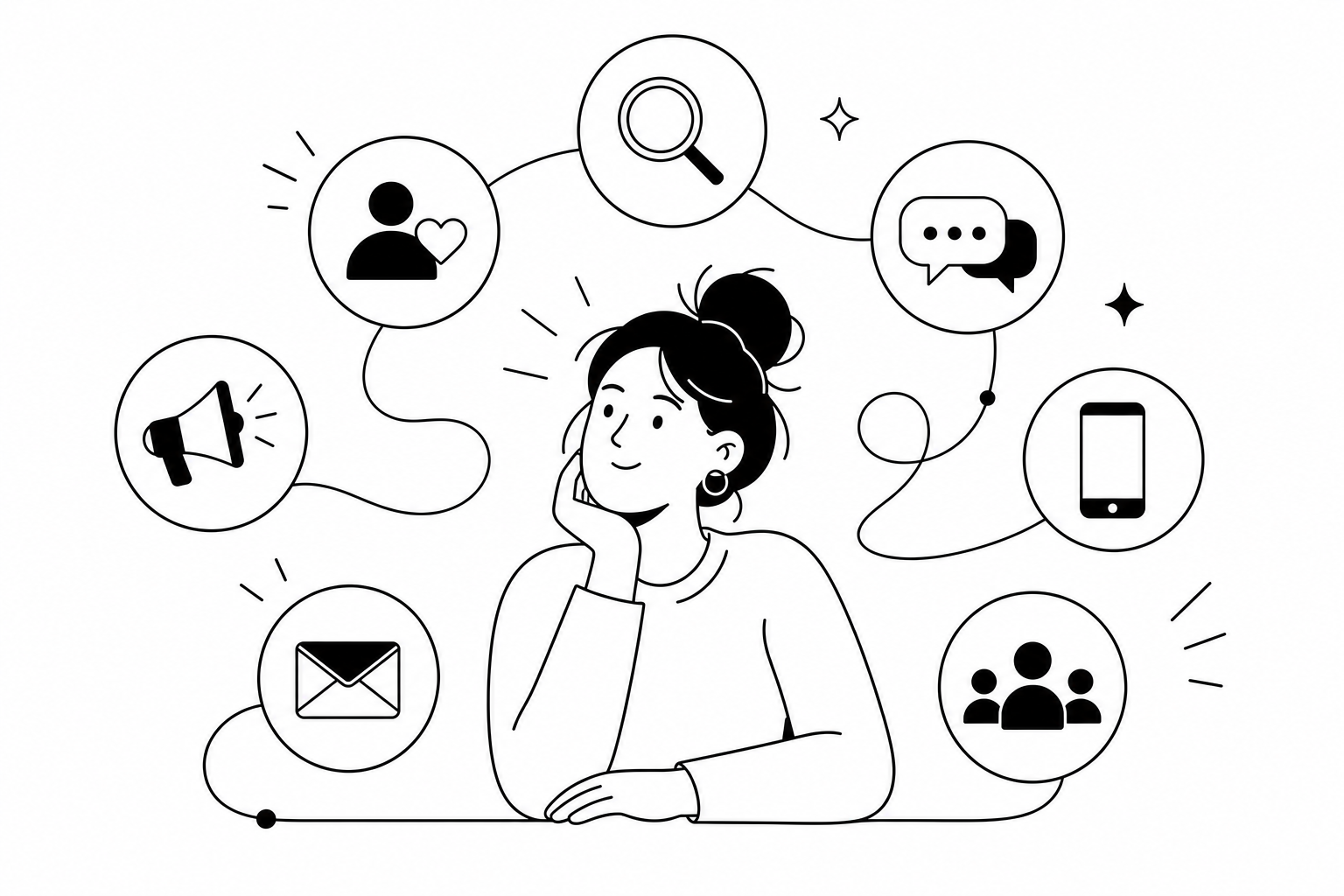
Your “how did you hear about us survey” is probably lying to you. Not because customers are dishonest, but because memory is messy and attribution is social: people say “Instagram” when they saw three TikToks, a podcast mention, a friend’s text, and your retargeting ad over six weeks. If you force that journey into one checkbox, you don’t get clean data—you get false confidence.
Why the standard “how did you hear about us?” survey fails
Single-select attribution collapses a real journey into a fake answer. Most DTC brands ask this question at checkout or post-purchase, offer six channels, and call it insight. That works if customers discover brands in a single moment. They don’t.
I’ve seen this pattern for years: a growth team celebrates “word of mouth” because it wins the survey, while paid social quietly did the heavy lifting upstream. The survey didn’t reveal the path. It rewarded the last memorable touchpoint.
The second failure is timing. Ask too late and recall degrades. Ask too early and customers haven’t had enough exposure to answer meaningfully. Ask after purchase and many respondents rationalize their decision instead of reconstructing it.
The third failure is answer design. Predefined channels teach people how to answer. If you list Instagram, TikTok, Google, Friend, Podcast, and Other, you’re not measuring discovery cleanly—you’re narrowing what counts as discovery.
On a 14-person growth team I supported for a premium skincare brand, their survey said 38% of buyers came from “Instagram.” When we ran follow-up interviews with recent first-time customers, we found “Instagram” often meant “I first noticed the founder on TikTok, checked reviews on Reddit, then got served Instagram ads for two weeks.” The learning wasn’t “Instagram is best.” It was that social proof plus repeated exposure drove conversion, and their attribution model was flattening that sequence.
A better survey captures source, sequence, and influence
The best “how did you hear about us survey” does three jobs: it identifies where awareness started, what reinforced it, and which touchpoint actually moved someone toward purchase. You need all three or you’ll overfund vanity channels.
I use a three-layer structure instead of one blunt question. First ask for unaided recall. Then ask for aided recognition. Finally ask about influence, because “first heard” and “most persuasive” are rarely the same thing.
The three-question structure that works
- “Before today, where do you remember first hearing about us?”
- “Which of these places have you seen or heard about us since then?”
- “Which one had the biggest impact on your decision to buy today?”
This structure separates origin from reinforcement. That matters because DTC buying journeys are usually cumulative, not linear.
If you can, make the first question open-text before showing channel options. You’ll get messier data, but it’s far more diagnostic. Open recall surfaces creators, communities, comparison behaviors, and offline moments that your media dashboard will never show.
Then use a multi-select recognition question with sensible categories: Instagram, TikTok, YouTube, Google search, friend or family, podcast, newsletter, online review, retail or in-person event, creator/influencer, and “other.” Keep it short enough to answer fast, but broad enough to catch real behavior.
For help designing better customer prompts generally, I’d start with these company survey questions for customers. Most brands don’t have a question problem—they have a framing problem.
The best question wording avoids channel bias and fuzzy recall
Bad wording creates bad attribution. Small phrasing choices decide whether respondents guess, simplify, or actually think. “How did you hear about us?” sounds harmless, but it hides three ambiguities: first touch, last touch, and strongest touch.
I prefer wording that anchors the task. “Where do you remember first hearing about us?” signals memory, not certainty. “Which had the biggest impact on your decision?” signals influence, not chronology.
Questions I’d actually use for a DTC brand
- Where do you remember first hearing about us?
- Had you seen or heard about us anywhere else before buying?
- Which of those had the biggest impact on your decision to buy?
- What specifically do you remember seeing or hearing?
- How long ago was that first time, roughly?
The fourth question is where the gold is. If someone writes, “A creator compared your leggings to two competitors and said yours held shape after washing,” that’s not just attribution. That’s messaging, positioning, and proof language you can reuse.
On a subscription coffee brand with a tiny two-person insights function, we added “What specifically do you remember?” after a source question and learned that “podcast” actually meant host-read discount codes during morning commute listens. The brand had been testing polished awareness spots. We shifted toward host-integrated reads and saw first-order conversion lift within six weeks.
If your broader survey data already feels shaky, read why most surveys lie. The same design errors show up in attribution surveys all the time.
Placement matters more than most brands admit
The right survey in the wrong moment still gives weak data. I’d rather see a simple question placed well than a sophisticated flow buried in a bad touchpoint. For DTC, placement should follow the decision you’re trying to understand.
If you care about awareness quality, ask early—email signup, quiz start, or first account creation. If you care about purchase influence, ask at checkout completion or immediately after the order confirmation. If you try to solve both with one late-stage question, you’ll blur them together.
Best placements by research goal
- Newsletter signup: best for early awareness source
- Quiz or skin/hair assessment start: best for motivated discovery
- Checkout confirmation: best for purchase influence
- Post-purchase email within 24 hours: best for richer open-text detail
- Win-back or repeat purchase flows: best for comparing first-touch versus retained loyalty drivers
I strongly prefer a lightweight on-site question plus a deeper follow-up with a subset of respondents. This is where Usercall is useful in practice: you can trigger user intercepts at key product analytic moments—say, after first purchase, checkout abandonment recovery, or quiz completion—and then run AI-moderated interviews with real researcher controls to unpack the “why” behind the response.
That combination beats dashboard attribution alone. A checkbox can tell you “TikTok.” A research-grade follow-up can tell you the customer trusted TikTok only after validating your claims in Reddit threads and dermatologist reviews.
Open text beats perfect coding when you want richer attribution
Most teams are too afraid of messy qualitative data. They’d rather have neat but shallow channel counts than complicated answers that expose the real path. That instinct is backwards.
DTC brands don’t lose growth because they lack a pie chart of channels. They lose growth because they don’t understand why one touchpoint stuck, why another created skepticism, or why customers needed four exposures before buying.
Open text gives you this. The tradeoff is analysis effort. But with modern tooling, that’s no longer a good excuse.
I worked with a 40-person home goods brand launching a new premium bedding line. Their post-purchase survey over-reported “Google” and under-reported creators. We reviewed 312 open-text responses and found many customers used Google only after hearing about the product on YouTube or from a friend. Search was a validation step, not the origin. That changed budget allocation and creative testing for the next quarter.
If your goal is understanding motivations, not just source labels, this pairs well with a broader customer needs survey approach.
The practical setup: what I’d launch this week
Keep the survey short, but make the logic smarter. You do not need a 12-step attribution instrument. You need a few well-placed questions, a clean taxonomy, and a plan for follow-up.
My default setup for a DTC brand is simple: one open-text source question, one multi-select exposure question, one single-select influence question, and one optional open-text memory probe. That’s enough to detect patterns without crushing completion rates.
The setup I recommend
- Ask “Where do you remember first hearing about us?” in open text.
- Show a multi-select list of all places they’ve since seen your brand.
- Ask which one most influenced the purchase.
- Include one optional prompt: “What do you remember seeing or hearing there?”
- Review results monthly by first-time versus repeat buyer, product line, and campaign period.
- Interview a small sample of respondents each month to validate what the survey suggests.
Segmenting matters. First-time buyers often cite discovery channels; repeat buyers often cite email, SMS, or product experience itself. If you blend them, your survey becomes a mush of acquisition and retention signals.
And don’t skip recruitment for follow-up research. If you need a consistent pipeline of buyers, abandoners, or high-intent visitors for interviews, use a clear outreach process like the one in this guide to recruiting participants for research.
The real takeaway is simple: a “how did you hear about us survey” should not pretend to solve attribution alone. It should reveal the customer’s remembered path, expose influential moments your analytics miss, and point you toward the next questions worth asking. That’s how you stop collecting channel trivia and start learning how demand actually forms.
Attribution questions are just one piece of a bigger feedback puzzle — pair them with the right satisfaction questions to understand not just where customers found you, but why they stayed. For a full breakdown of what to ask at every stage of the customer relationship, see our guide to customer satisfaction survey questions. If you want richer, more honest answers than a dropdown menu can capture, Usercall lets you turn 'how did you hear about us' into a real conversation.
Related: post-purchase survey questions for ecommerce brands · loyalty program survey questions · 51 consumer survey questions