
5 Best Mixpanel Alternatives in 2026 (Honestly Compared)
product analytics platform
Mixpanel is genuinely excellent at showing you what users do — funnels, retention curves, cohort breakdowns, all of it. The problem hits when retention drops 8 points and every chart confirms it happened but none of them can tell you why. This page covers five tools that fill the gaps Mixpanel leaves, starting with the one built specifically to answer the question your dashboards can't.
Can it tell you the 'why' behind a metric — not just surface another metric?
Mixpanel is a what-happened machine. Any alternative worth switching to (or adding) should give you access to the user's actual reasoning — through open-ended feedback, real conversations, or qualitative synthesis. If it just gives you more charts, you haven't solved the problem.
Does it connect to behavioral triggers — or does it live in a silo?
The most valuable insight happens in context. Look for tools that can fire research or feedback collection based on product events — a user who churned, skipped a feature, or stalled in onboarding. Disconnected from behavior, feedback is just noise.
Can it scale qualitative insight without scaling your research team?
Traditional user interviews don't scale. If your alternative requires scheduling, moderation, or hours of manual synthesis for every study, it's not a solution — it's a bottleneck. The best tools in this space let you get deep qualitative insight from hundreds of users without adding headcount.
Does it surface patterns from feedback you're already collecting — or require net-new work?
You already have NPS verbatims, app store reviews, support tickets, and survey open-ends sitting unanalyzed. The right tool should make that existing data immediately actionable — not ask you to build a new collection workflow from scratch before you see any value.
Quick verdict
- ⭐ Best overall — Usercall: The qualitative layer that explains what your Mixpanel dashboards can't.
- Best for data-mature product and growth teams… — Amplitude: A deeper product analytics platform for teams who've outgrown Mixpanel's model.
- Best for engineering-led teams who want full… — PostHog: Open-source product analytics with session replay and feature flags — all in one stack.
- Best for product teams frustrated by gaps in… — Heap: Retroactive analytics that captures everything — no event tracking plan required upfront.
- Best for enterprise saas product and customer… — Pendo: Product analytics plus in-app guides — for teams who want to act on behavior, not just observe it.

1. Usercall
⭐ TOP PICKThe qualitative layer that explains what your Mixpanel dashboards can't. Self-serve from $89 a month. Your first interview is free. No sales call.
Usercall runs AI-moderated user interviews at scale — async, no scheduling, no moderator — and automatically analyzes any unstructured feedback into themes, patterns, and summaries in minutes. Where Mixpanel shows you that a cohort churned or a feature is being skipped, Usercall fires an in-product AI interview at that exact moment and surfaces the narrative behind the number. It's built for product teams, PMs, and UX researchers who need qualitative depth without the manual overhead that makes traditional research impossible to scale.
- ✓ Mixpanel can tell you a cohort churned but gives you no mechanism to ask them why — Usercall's in-product research triggers fire AI interviews automatically based on product events like churn, feature skips, or activation stalls, connecting behavioral data directly to user reasoning.
- ✓ Mixpanel leaves NPS comments, support tickets, and app store reviews completely unanalyzed — Usercall's qualitative analysis engine ingests all of it and returns coded themes, confidence scores, AI summaries, and a conversational query interface in minutes, not weeks.
2. Amplitude
A deeper product analytics platform for teams who've outgrown Mixpanel's model.
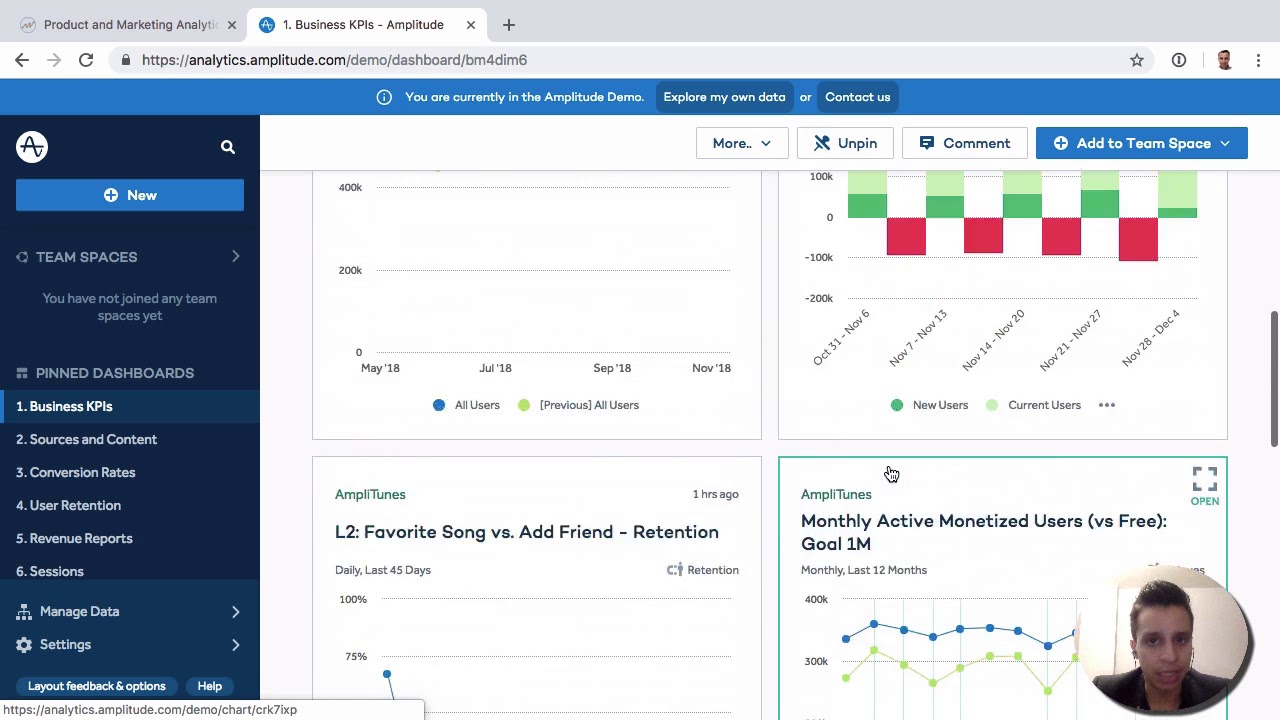
Amplitude is a full-featured product analytics platform with more advanced behavioral analysis, experimentation, and customer journey tooling than Mixpanel. It's a strong alternative if your frustration is with Mixpanel's data model, querying limitations, or lack of built-in A/B testing — not with quantitative analytics as a category. Teams with complex event architectures and a need for tighter experimentation loops tend to find Amplitude a meaningful upgrade.
- ✓ Amplitude's behavioral cohorts and journey analysis are more flexible and powerful than Mixpanel's, making it easier to segment complex user paths without SQL.
- ✓ Built-in experimentation (Amplitude Experiment) lets you run A/B tests tied directly to your analytics data, without stitching together a separate testing tool.
3. PostHog
Open-source product analytics with session replay and feature flags — all in one stack.
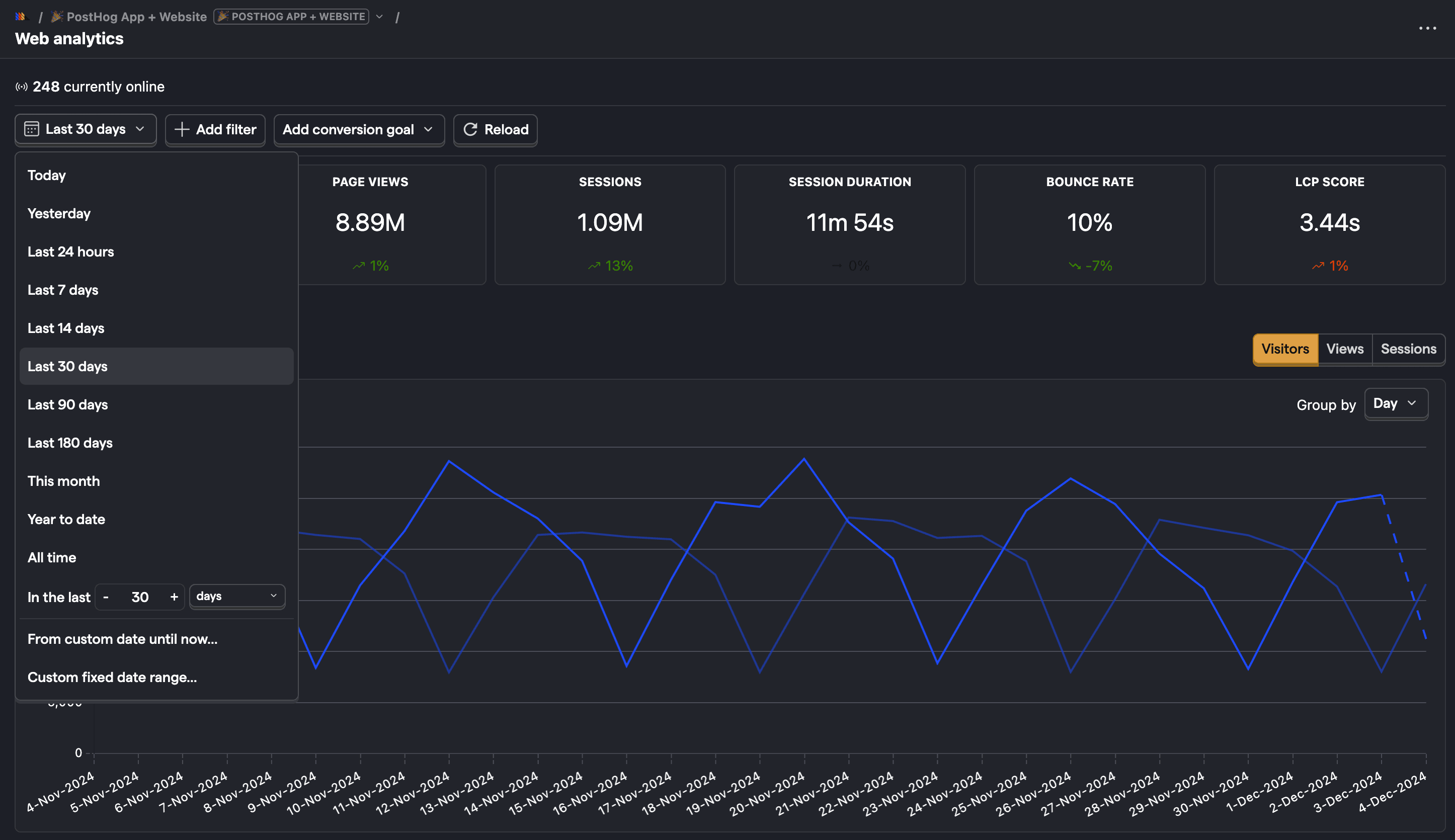
PostHog is an open-source product analytics platform that bundles event tracking, funnels, session recordings, heatmaps, and feature flags into a single self-hostable product. If your frustration with Mixpanel is cost, vendor lock-in, or the need to consolidate multiple tools, PostHog is one of the most credible switches available. It skews toward engineering-led teams comfortable with self-hosting or cloud deployment, and the open-source model means full data ownership.
- ✓ PostHog combines event analytics, session recordings, and feature flags in one product — eliminating the cost and integration overhead of running Mixpanel alongside a separate session replay tool.
- ✓ Open-source and self-hostable, so teams with strict data residency requirements or those burned by Mixpanel's pricing at scale have a credible path to full control.
4. Heap
Retroactive analytics that captures everything — no event tracking plan required upfront.
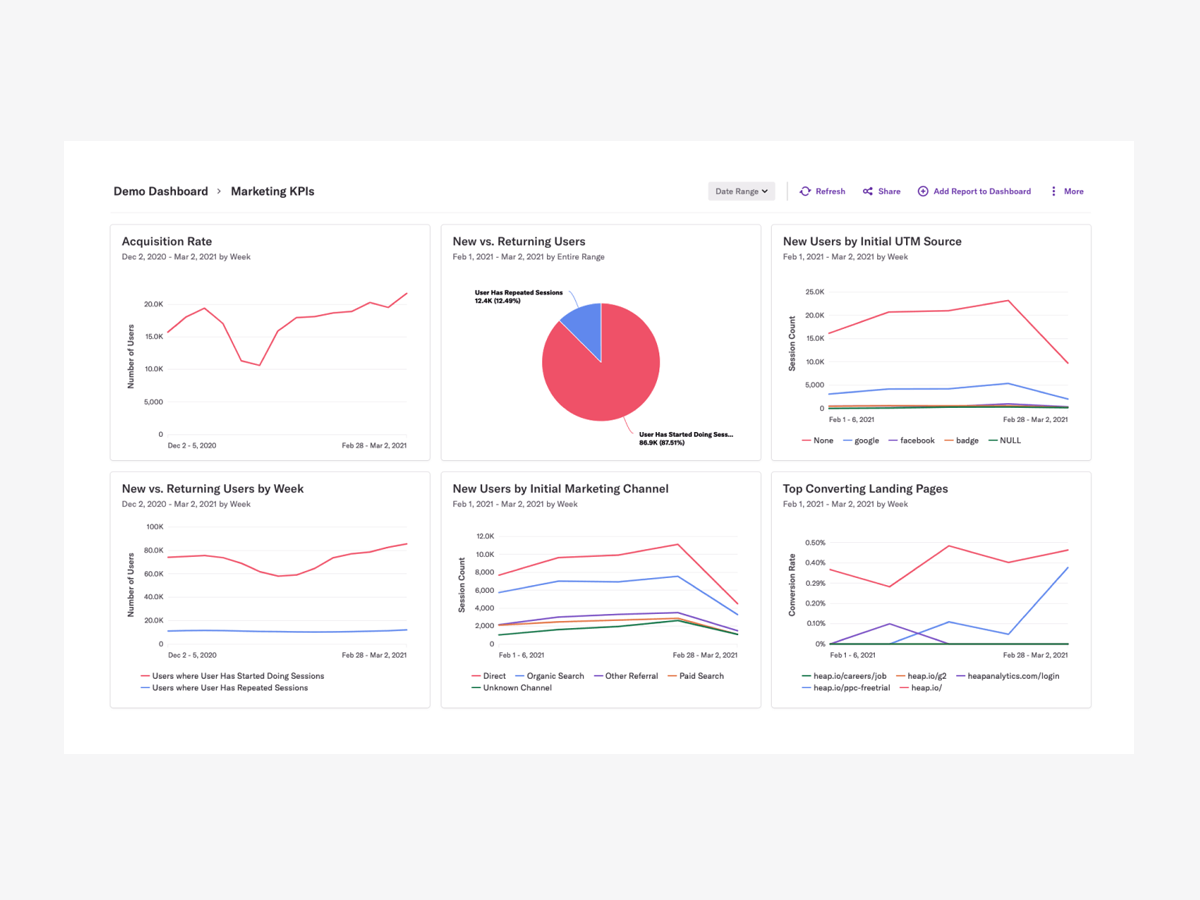
Heap auto-captures every user interaction from the moment you install it, meaning you never lose historical data because you forgot to instrument an event. If you've hit Mixpanel's ceiling around retroactive analysis — wishing you'd tracked something months ago — Heap directly solves that. It also includes session replay and journey analysis, making it a strong all-in-one quantitative analytics alternative for teams tired of maintaining complex tracking plans.
- ✓ Heap's autocapture means you never lose data because an event wasn't instrumented — you can define and analyze any interaction retroactively, which Mixpanel's manual tracking model makes impossible.
- ✓ Built-in session replay and journey maps let teams see exactly how users navigate without needing a separate tool, reducing the analytics stack and associated cost.

5. Pendo
Product analytics plus in-app guides — for teams who want to act on behavior, not just observe it.
Pendo combines product analytics with in-app messaging, onboarding guides, and NPS surveys, making it a strong choice for teams who want to both understand and actively influence user behavior inside the product. Where Mixpanel only observes, Pendo lets you respond — launching a targeted tooltip when a user stalls, or a survey when a key feature is skipped. It's particularly popular with enterprise SaaS teams who need analytics, engagement, and feedback in a single platform.
- ✓ Pendo's in-app guide builder lets teams respond to behavioral signals in real time — triggering tooltips, walkthroughs, or surveys based on user actions — something Mixpanel has no equivalent for.
- ✓ Native NPS and in-app survey collection tied directly to user segments and behavioral data means feedback is contextualized by what users actually did, not collected in isolation.
Want a direct comparison? Read our Usercall vs Mixpanel breakdown — feature-by-feature analysis with pricing and a clear verdict on which tool fits your workflow.
| Feature | Usercall AI | Mixpanel |
|---|---|---|
| Research Rigor & Methodology | ||
| AI Automated Coding & Themes | ✅ Yes | ❌ No |
| Editable codes for iterative refinement | ✅ Yes | ❌ No |
| Multi-source analysis: interviews, tickets & reviews | ✅ Yes | ❌ No |
| Adaptive, AI-decided follow-up depth (not a fixed follow-up count) | ✅ Yes | ❌ No |
| Evidence-backed analysis — themes traceable to exact quotes | ✅ Yes | ❌ No |
| Detailed AI summaries per theme | ✅ Yes | ❌ No |
| AI Chat with Your Data | ✅ Yes | ❌ No |
| Voice of Customer (VoC) analysis | ✅ Yes | ❌ No |
| Research | ||
| In-product AI Moderated Interviews | ✅ Yes | ❌ No |
| In-product research triggers (e.g. post-purchase insights) | ✅ Yes | ✅ Yes |
| Visual stimulus / concept testing (show images or prototypes during interview) | ✅ Yes | ❌ No |
| Self-Serve & Pricing | ||
| Self-serve — no sales call required | ✅ Yes | ✅ Yes |
| Free to try / transparent pricing | ✅ Yes | ✅ Yes |
| Pay-as-you-go | Pay-as-you-go | Free tier available; paid plans start around $28/month, scaling by tracked users |
| Platform | ||
| Ideal For | Product Teams, PMs, UX Managers, Startups, Market Researchers | Product managers and growth teams analyzing quantitative in-product behavior |
What's the best Mixpanel alternative for understanding why users churn?
Mixpanel can show you when and at what rate users churn, but it can't surface the reasons behind that decision. Usercall fills this gap directly — it triggers AI-moderated interviews automatically when a churn event fires, so you get qualitative insight from the actual users who left without scheduling a single conversation yourself.
Can I use Mixpanel and an alternative together, or do I need to replace it?
For most teams, the right move is to keep Mixpanel for quantitative event analytics and add a qualitative layer alongside it — not replace it. Tools like Usercall are specifically designed to complement product analytics platforms by explaining the narrative behind the numbers your dashboards surface.
What's a cheaper alternative to Mixpanel with similar analytics features?
PostHog is the most cost-competitive alternative with comparable event analytics capabilities — its free tier is generous, it's open-source, and self-hosting eliminates per-event costs that make Mixpanel expensive at scale. Heap is also worth evaluating if retroactive analytics is the specific capability you're after.
How do I find out why my activation or retention metrics dropped in Mixpanel?
Mixpanel can confirm the drop happened and help you segment which cohorts were affected, but it has no mechanism for capturing user reasoning. The most effective approach is to trigger a qualitative research study — through a tool like Usercall — targeting the exact cohort where the metric moved, so you get direct user explanations tied to the behavioral data you're already tracking.