
User Persona Templates: Why Most Sit Unused After Week One
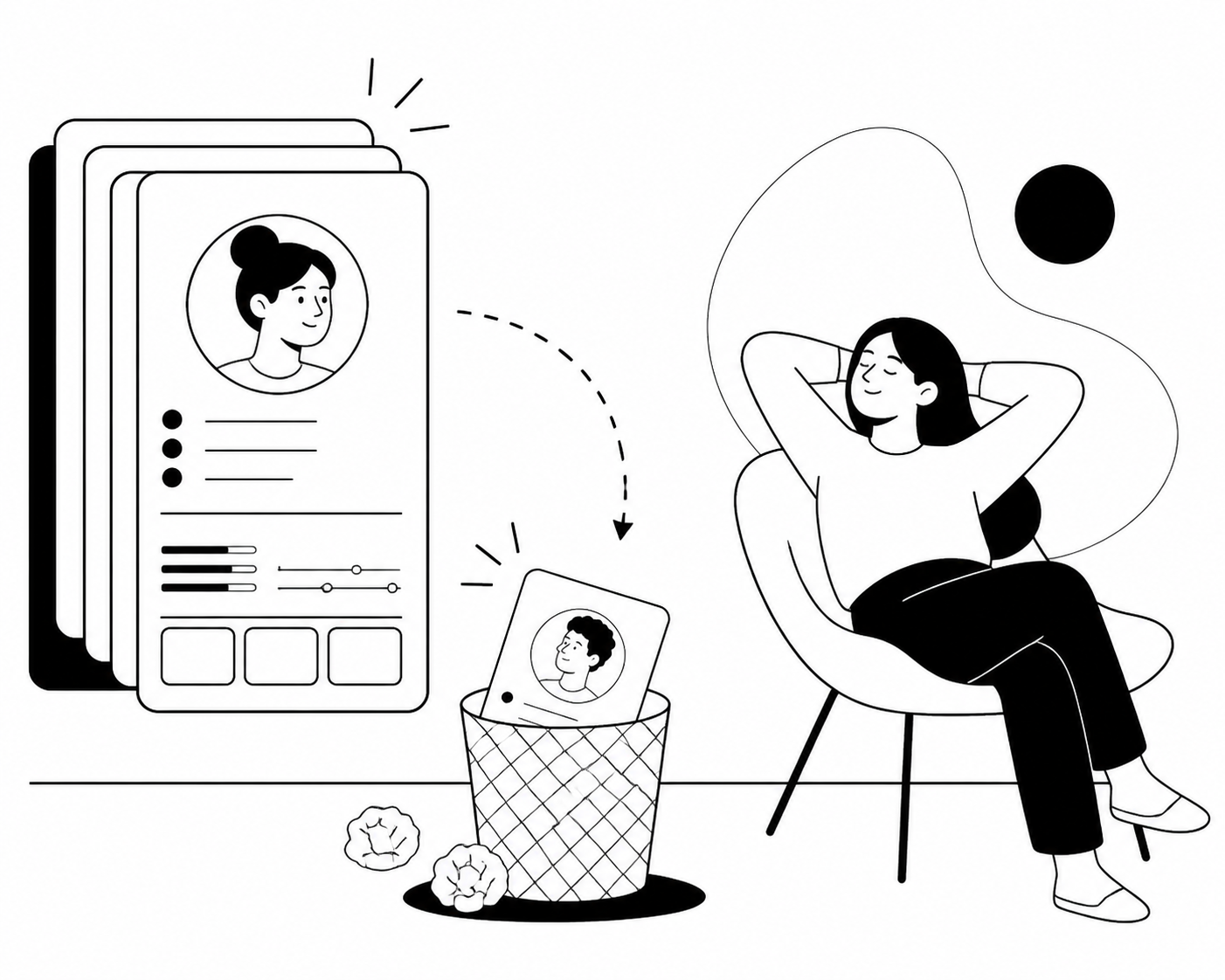
I've watched more persona templates die in a Google Slides deck than I've watched actually change a product roadmap. Here's the pattern: a team spends two weeks interviewing customers, someone builds four beautiful persona slides with stock photos and made-up names like "Marketing Mary," everyone claps in the readout meeting, and then those slides never get opened again. Six months later, a new PM joins, asks "who are we building for," and nobody can find the file, let alone trust what's in it.
The problem isn't the concept of a persona template. It's that most templates are built to look finished, not to be used. They're static documents pretending to represent dynamic humans, filled out once based on assumptions or a handful of interviews, then treated as gospel for years. If you're searching for a user persona template right now, you probably already suspect this. So let's fix it properly, not just hand you another fillable PDF.
What a Persona Template Is Actually For
A persona template exists to compress research into a shape your team can act on fast. That's it. It's not a deliverable, it's a decision-making tool. If a designer can't look at your persona and immediately know what to prioritize in an onboarding flow, or if a marketer can't use it to write copy that lands, the template has failed regardless of how polished it looks.
I learned this the hard way early in my career, running research for a mid-size retail client. We built gorgeous personas, complete with a "day in the life" narrative and a quote bubble. The client loved them in the workshop. Three months later I asked the product team how they were using the personas. Blank stares. They'd been used exactly once, in that workshop, as a prop. The template had all the right sections but none of the right specificity to drive an actual decision.
The Free Templates That Look Great and Do Nothing
Search "user persona template" and you'll find dozens of near-identical layouts: a headshot, a name, an age, a job title, a bulleted list of "goals" and "frustrations," maybe a motivation scale from 1 to 10. These templates are seductive because they're easy to fill in fast, which is exactly the problem. You can complete one of these in twenty minutes based on nothing but your own assumptions about your users. No interviews required. No evidence required.
That ease is a trap. A template that can be completed without talking to a real customer will get completed without talking to a real customer, every single time, especially under deadline pressure. If your persona template doesn't force you to cite where each claim came from, it's not a research tool, it's a guessing tool with better design.
Building a Persona Template From Real Interview Data
The templates that actually work are built backwards from evidence, not forwards from a blank layout. Before you touch a template structure, you need a body of qualitative interviews to pull from, ideally 12 to 20 per segment, so patterns actually emerge instead of you cherry-picking the loudest voice.
I've written a full breakdown of this exact process, including the specific fields that hold up under scrutiny and the ones that are just decoration, in this guide to building a user persona template that actually changes decisions. The short version: every field in your template should map back to a specific, recurring pattern in your interview transcripts, not a hunch from a brainstorm session.
Here's a small anecdote that shows why this matters. A SaaS client of mine had a persona called "Efficient Erin," built entirely from internal assumptions about their target user. When we finally ran 15 voice interviews with actual customers, we found the real drop-off wasn't efficiency at all, it was trust in the AI-generated output the tool produced. The whole persona had been solving the wrong problem for a year. The template looked fine. The content was fiction.
The Fields That Actually Belong in a Persona Template
Strip out the decorative fields and you're left with a short list of things that genuinely change how a team behaves. Here's how I structure it now, after a decade of watching which fields get referenced in meetings and which get ignored.
| Field | Why It Matters | Source It Should Come From |
|---|---|---|
| Trigger event | What actually made them start looking for a solution | Direct quote from interview |
| Current workaround | Shows what you're really competing against | Behavioral evidence, not stated preference |
| Success definition | How they personally judge if the product "worked" | Recurring phrase across multiple interviews |
| Decision blockers | What stops them from buying or adopting | Objections raised unprompted |
| Emotional driver | The underlying feeling behind the rational reason | Tone and word choice in transcripts |
| Verbatim quote | Keeps the persona human, not a summary | Exact transcript excerpt |
Notice what's missing: stock photos, made-up names, and Myers-Briggs style personality labels. None of that predicts behavior. It just makes the slide prettier for the one meeting where someone glances at it.
B2B Persona Templates Need a Different Shape Than B2C
A lot of frustration with persona templates comes from using a B2C-shaped template for a B2B problem, or vice versa. In B2C, a persona template can lean heavily on individual psychology and lifestyle because one person makes the decision and uses the product. In B2B, the "persona" is often a committee wearing a trench coat. If you're doing B2B research, your template needs a field for role in the buying process (champion, blocker, budget holder, end user) because a single named persona rarely captures the full decision unit. I've seen B2B teams waste months optimizing onboarding for an "end user" persona while ignoring the procurement stakeholder who actually killed 80% of deals in the trial stage. Your template should reflect that a single customer segment might need two or three linked personas representing different roles in the same account.
How to Keep a Persona Template From Going Stale
Here's the uncomfortable truth: a persona built from research done 18 months ago is a snapshot of a market that may no longer exist. Pricing changed, competitors launched, your product added features that shifted who adopts it. Yet most teams treat their persona template as a one-time artifact, filed away like a completed project rather than a living document. The fix isn't complicated, it's just rarely prioritized. Set a cadence, quarterly for fast-moving markets, twice a year for slower B2B categories, where you re-run a small batch of interviews specifically to stress-test whether the persona still holds. You don't need to redo the whole research program. Ten focused conversations checking your core assumptions is usually enough to tell you if the persona needs an update or if it's still accurate. I now recommend clients build the refresh cadence into the template itself, literally a field at the top that says "last validated" and "next review date." It sounds trivial, but a visible expiration date is the single best way I've found to stop a persona from calcifying into unquestioned fact.
Common Mistakes I See With Persona Templates
A few patterns come up again and again when I audit research programs:
- Building personas from internal stakeholder opinions instead of customer interviews, then calling it "customer research" in the readout
- Creating too many personas, five or six, when the underlying data really only supports two or three distinct segments
- Treating demographic details like age and location as meaningful when the actual driver of behavior is something situational, like company size or urgency of the trigger event
- Writing goals and frustrations as generic statements that could apply to almost any user of almost any product
- Never revisiting the persona once it ships, even as the product and market evolve
Every one of these mistakes traces back to the same root cause: treating the template as the deliverable instead of treating the underlying research as the deliverable and the template as just the packaging.
When a Static Template Isn't Enough
Here's where I'll be blunt. Even a well-built persona template, sourced from real interviews and refreshed on a schedule, is still a snapshot. It answers "who was this customer three months ago" better than it answers "who is this customer right now." For teams shipping fast or operating in markets that shift quickly, a quarterly refresh cycle can already feel outdated by the time it's socialized across the org. The teams I respect most have moved away from treating persona-building as a project with a start and end date, and instead treat it as a continuous input, something closer to a live feed of customer voice than a static file. That requires running qualitative interviews at a volume and cadence that would be impossible for a human research team or an agency to sustain manually, which is exactly the gap AI-moderated interviews are built to close. You can run dozens of structured voice conversations a week, have themes and quotes extracted automatically, and update your persona fields from actual transcript evidence instead of a stakeholder's best guess from last quarter.
Building Your Own Template, Starting Today
If you're starting from scratch, don't open a template gallery first. Open your existing interview transcripts, or go get some if you don't have any yet. Pull out the recurring trigger events, the workarounds people describe, the objections that come up unprompted, and the verbatim language people use to describe success. Only after you have that evidence should you shape it into a template. The layout is the last step, not the first. And build in the expiration date from day one. A persona template without a validation date is really just a hypothesis wearing the costume of a finished insight.
If you want research that keeps your personas current instead of frozen in time, Usercall runs AI-moderated voice interviews at scale, pulls out the themes and quotes automatically, and gives you the evidence to keep your persona templates honest, quarter after quarter, without the overhead of a full agency engagement. Try it on your next research cycle and see how fast a persona template can go from guesswork to grounded.