
Research Design Methods: Why the Framework You Pick Before You Start Determines Everything After
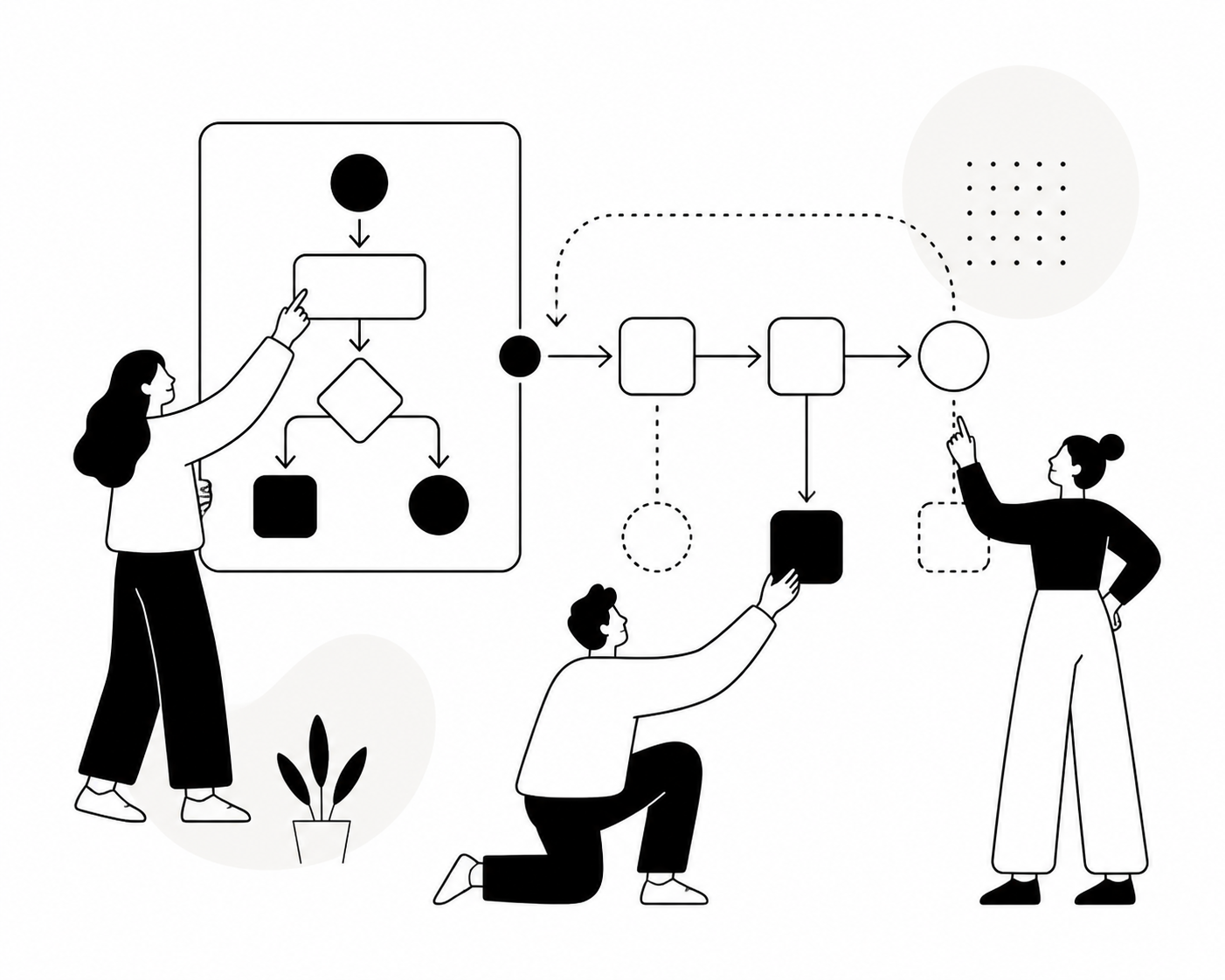
Most research projects fail before a single participant is recruited. Not because the interview questions were bad or the survey had typos, but because nobody stopped to choose the right research design. I've watched teams spend six weeks collecting data only to realize at the analysis stage that their design couldn't actually answer the question they set out to answer. That's not a data problem. That's a design problem, and it happens constantly because "research design" sounds like an academic formality instead of the single decision that shapes every downstream choice you make.
Here's the tension nobody talks about: research design isn't about picking a methodology you learned in grad school. It's about matching the structure of your study to the actual decision you're trying to make. Get that match wrong and you end up with beautiful data that answers a question nobody asked.
What Research Design Actually Means (And Why Most Teams Skip It)
Research design is the blueprint that connects your question to your method. It determines whether you're comparing groups, tracking change over time, exploring meaning, or testing a hypothesis. It dictates your sample size, your timeline, your analysis approach, and honestly, whether your stakeholders will trust the results enough to act on them.
I've sat in kickoff meetings where a PM says "let's just send a survey" before anyone has defined whether they need descriptive data, causal evidence, or exploratory insight. That's like a contractor pouring a foundation before the architect finishes the blueprints. The build might look fine for a while, but the cracks show up exactly when you can't afford them, usually right before a leadership presentation.
For a full breakdown of the major design categories and how researchers actually use them in practice, I wrote a detailed guide on types of research design that walks through experimental, correlational, descriptive, and exploratory frameworks with real examples. That post is the place to start if you're still deciding which family of design fits your problem. What I want to do here is give you the practical decision-making layer that sits on top of all of it.
The Four Design Families You'll Actually Use
In ten years of running studies for SaaS product teams, ecommerce brands, and a handful of agencies, I keep coming back to four design families that cover 90% of real-world research needs.
| Design Type | Best For | Common Pitfall |
|---|---|---|
| Cross-sectional | Snapshot of attitudes or behavior at one point in time | Mistaking correlation for causation |
| Longitudinal | Tracking change, churn drivers, or behavior shifts | Underestimating attrition and timeline cost |
| Qualitative/exploratory | Understanding "why" behind behavior, generating hypotheses | Treating small samples as statistically representative |
| Mixed methods | Validating patterns with numbers and explaining them with narrative | Running both methods in isolation instead of integrating them |
Each of these deserves its own deep dive, and I've written full guides on three of them below. But the short version is this: your research question should dictate the design, not the other way around. If you already know your favorite tool is a 20-question survey, you're going to force every question into that shape whether it fits or not.
When You Need a Snapshot, Not a Story: Cross-Sectional Design
Cross-sectional design is the workhorse of market research. You survey a defined population at a single point in time and analyze the responses as a snapshot. It's fast, it's cheap relative to longitudinal work, and it's perfect for questions like "what percentage of our users would pay for feature X" or "how does satisfaction differ between plan tiers right now." I used cross-sectional design early in my career for a client trying to understand pricing sensitivity across three customer segments. We didn't need to track anyone over time, we needed a clear comparison at a single moment before a pricing change went live. That's the exact use case cross-sectional design is built for, and it's also where teams most often misuse it by trying to draw conclusions about change or causation from a single-moment dataset.
If you're planning a study that involves comparing groups or establishing a baseline before a bigger initiative, I go deep on structure, sampling, and pitfalls in my guide to cross-sectional survey design, including real examples of how to avoid the "correlation equals causation" trap that kills credibility with skeptical stakeholders.
Designing for Depth: Qualitative Research Design
This is where I spend most of my professional life, and it's also the design family most frequently done badly. Qualitative research design isn't "let's talk to some users." It's a structured decision about sample size logic, interview protocol, coding framework, and how you'll know when you've reached saturation. I once inherited a project where the previous researcher had conducted 40 unstructured interviews with no consistent protocol. Every conversation covered different ground, some lasted ten minutes, some lasted ninety. There was no way to synthesize that into anything a product team could act on. We had to essentially start over with a proper design: a semi-structured discussion guide, a clear participant screening criteria, and a coding plan built before the first interview happened, not after.
Good qualitative design also means deciding upfront whether you're doing grounded theory, phenomenological research, case study analysis, or a simpler thematic approach. Each of those has different implications for how many participants you need and how you structure your interview questions. I break all of this down with practical frameworks in my guide to research design for qualitative research, including how to build a discussion guide that actually produces analyzable data instead of forty transcripts of rambling conversation.
One thing I'll say here that doesn't fit neatly into a methods guide: qualitative design lives or dies on moderation quality. A brilliant discussion guide run by an inconsistent moderator produces inconsistent data, and inconsistent data is functionally the same as bad design. This is actually why AI-moderated interviews have become useful for teams running qualitative studies at scale. When every participant gets the same probing follow-up logic applied consistently, you remove one of the biggest sources of design failure in qualitative work: moderator drift.
Combining Numbers and Narrative: Mixed Methods Design
Mixed methods research gets recommended constantly and executed poorly almost as often. The idea is simple: use quantitative data to establish patterns and scale, then use qualitative data to explain the "why" behind those patterns, or vice versa. The execution is where things fall apart. I worked with a growth team that ran a large-scale NPS survey, found a clear drop in scores among enterprise customers, and then bolted on five customer interviews as an afterthought. The interviews were treated as a footnote instead of a core part of the design. When we redesigned the study properly, we built the qualitative phase around the specific segments the survey flagged as at-risk, with interview questions directly targeting the drivers behind the quantitative dip. That's the difference between mixed methods as a checkbox and mixed methods as an actual design decision.
There are real structural choices to make here: sequential versus concurrent design, whether qual informs quant or the other way around, and how you'll integrate findings instead of just presenting two separate reports stapled together. I cover the decision tree for all of this, including a full worked example, in my guide on mixed methods research. If you're choosing between quant and qual and feel like you need both, that post will save you from the stapled-report mistake I made early on.
How to Actually Choose the Right Design
Here's the practical framework I use with every new project, before I touch a single tool or template.
- Start with the decision, not the method. What will someone actually do differently based on this research? If you can't answer that, no design will save you.
- Determine if you need to measure "what" or understand "why." Measuring points you toward quantitative or cross-sectional approaches. Understanding points you toward qualitative design.
- Check your timeline honestly. Longitudinal and mixed methods designs take real time. If leadership wants an answer in two weeks, don't pretend you're running a six-month tracking study.
- Consider whether you're establishing a baseline or measuring change. Baselines lean cross-sectional. Change over time requires longitudinal thinking, even if it's just two waves of the same survey.
- Match your sample size logic to your design, not the other way around. Qualitative saturation and quantitative statistical significance are completely different math, and mixing up the logic is one of the fastest ways to lose stakeholder trust.
I still run through this checklist on every project I lead, even after a decade of doing this work. The moment you skip it is the moment you end up with data that's technically accurate and practically useless.
Common Mistakes That Sink Research Design Before It Starts
A few patterns show up again and again across teams I've worked with, regardless of company size or industry.
Teams default to surveys because they're familiar, even when the question calls for depth a survey can't provide. Teams treat sample size as a universal number instead of a design-specific calculation. Teams skip a pilot phase entirely, which means design flaws don't surface until you've already burned your recruitment budget. And teams frequently confuse "we collected a lot of data" with "we answered the question," which are not the same thing at all. The fix for all of these is the same: slow down at the design phase. Fifteen minutes spent clarifying whether you need a cross-sectional snapshot, a qualitative deep dive, or a mixed methods approach will save you weeks of rework and a very uncomfortable stakeholder conversation about why the data doesn't actually say what everyone hoped it would say.
Where Usercall Fits Into Your Research Design
Whatever design you choose, the execution layer is where most qualitative studies actually break down, through inconsistent moderation, slow manual analysis, and interviews that never scale past a handful of participants. Usercall runs AI-moderated voice interviews that apply consistent, adaptive probing across every conversation, then automatically links themes to the exact quotes that support them. If your design calls for qualitative depth or a mixed methods approach, Usercall lets you collect that voice-of-customer data at a scale and speed that manual interviewing simply can't match. Try it on your next study and see what proper design paired with proper execution actually looks like.