
Cognitive Interviewing: A Technique for More Accurate Research
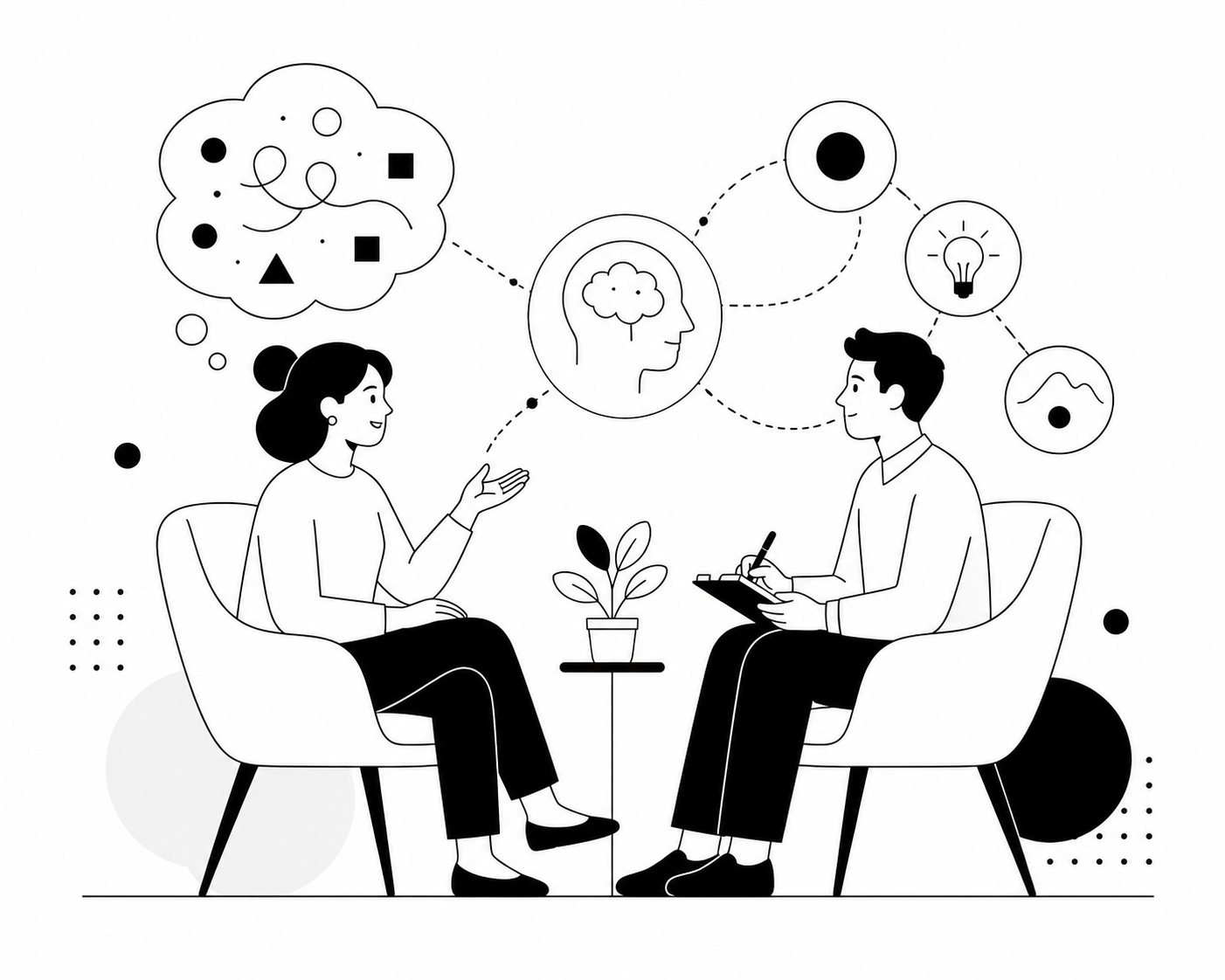
“Walk me through the last time you tried to cancel” sounds like a simple research question. In practice, most participants answer with a cleaned-up summary: what they believe happened, what they think should have happened, and what they now know after the fact. The actual sequence—the confusing screen, the competing task, the moment they nearly gave up—is usually missing.
I have run enough usability interviews to distrust a fluent answer. Confidence is not accuracy, and a tidy narrative is not a reliable memory trace. Cognitive interviewing gives researchers a disciplined way to recover more of the original experience without turning an interview into an interrogation.
Why “Tell Me What Happened” Produces Polished but Incomplete Recall
Standard open-ended interviewing fails when the research question depends on a specific past incident. A participant hears “What happened when you tried to submit an expense?” and gives you a conclusion: “The form was confusing.” That statement may be true, but it does not tell you whether the problem was unclear terminology, an error message, a missing receipt, a slow connection, or anxiety about submitting the wrong amount.
Memory is reconstructive. People do not retrieve a video recording of an event; they rebuild an account from fragments, assumptions, later information, and the cues available in the interview. A generic prompt encourages people to summarize; a cognitive interview helps them revisit.
The usual researcher mistake is to compensate with more direct questions: “Was the receipt upload hard?” “Did the error message confuse you?” Those questions feel efficient, but they contaminate recall by supplying possible answers. Once you name a feature, concern, or emotion, participants often incorporate it into their account.
In one study for a seven-person fintech product team, we interviewed 16 small-business owners about a failed bank-linking flow. The team expected authentication errors to dominate, because analytics showed a 38% drop at the connection step. When we first asked what happened, most participants vaguely blamed “the bank integration.” After asking them to reconstruct where they were, what they had been doing immediately beforehand, and what they saw first, we learned that 9 of 16 had abandoned before authentication: they were unsure whether connecting a personal account would expose unrelated transactions.
The metric identified the where. The cognitive interview uncovered the why. A standard feature-focused follow-up would have sent that team toward error-state redesign instead of trust messaging and account-selection clarity.
Cognitive Interviewing Recovers Event Details Through Deliberate Memory Cues
The cognitive interview was developed by forensic psychologists Ronald Fisher and Edward Geiselman to improve eyewitness recall. Its original use was high-stakes: help a witness remember details of an incident without feeding them a preferred story. UX and market researchers have adopted the technique because the same problem appears whenever we ask people to remember a real experience after the fact.
The method is not about pushing participants to remember harder. It is about giving memory several legitimate routes back to the event. Rather than asking for a single complete account, the interviewer uses context, broad reporting, alternate sequences, and carefully framed perspective shifts to surface details that a first telling leaves behind.
The four core techniques are straightforward in principle:
The four cognitive interview techniques create different paths into the same event
- Mental reinstatement of context: Ask participants to recreate the physical setting, device, task, mood, and circumstances surrounding the event before describing it.
- Report everything: Invite details that seem minor or irrelevant, because a discarded detail can reveal a trigger, workaround, or decision point.
- Recall in different orders: After a forward account, ask for the end-to-beginning sequence or start from a salient moment and work outward.
- Recall from different perspectives: Ask what another person present may have observed, or what the participant’s earlier self was trying to accomplish—without asking them to invent facts they could not know.
Researchers often treat these as a rigid script. That is the wrong application. A cognitive interview is a set of recall tools, not four mandatory exercises; using every technique in every 30-minute session creates fatigue and can make participants feel examined rather than understood.
The method also has limits. More detail does not automatically mean more truth, and researchers must never reward speculation. When a participant says, “I think the app froze,” separate the observed fact from the interpretation: “What did you see on screen that made it seem frozen?”
Mental Reinstatement Finds the Conditions That Created the Behavior
Mental reinstatement is the highest-value technique for product research because user behavior is inseparable from its setting. Before asking about the task, bring the participant back to the surrounding moment: “Think about the last time you tried to book that appointment. Where were you? What device were you using? What else were you trying to get done? What were you expecting when you opened the app?”
That sequence is not small talk. Context turns a generic complaint into an observable chain of decisions. Someone who says, “Checkout took too long,” may remember that they were in a parking lot, had one bar of signal, were buying a time-sensitive gift, and switched to a competitor after a loading state appeared twice. The product issue may be resilience and reassurance, not simply speed.
In a moderated study for a three-person team building a grocery delivery app, participants initially described substitution settings as “fine.” The complication was that all 10 sessions took place two to five days after the last order, and the team had only 45 minutes per interview. We spent the first three minutes reinstating the order moment—day of week, household situation, list creation, and delivery deadline—and six participants then recalled making substitutions while distracted by children or work calls; the outcome was a redesigned default system that cut substitution-related support contacts by 22% over the next month.
Good reinstatement prompts are neutral and sensory without being theatrical. Ask what was on the screen, what happened just before, what they noticed, and what they were trying to protect against. Do not ask, “Were you frustrated?” unless frustration has already emerged; ask what they felt and let the participant name it.
Multiple Recall Passes Expose the Gaps in the First Story
The first account should usually run forward because that is how people naturally organize experience. Let the participant tell the sequence with minimal interruption, then return to one or two moments where the account becomes vague, compressed, or contradictory. “You said you almost stopped there. Take me back to that point—what had happened immediately before you considered leaving?” is far more useful than “Why did you abandon?”
Recall in a different order is especially effective when users flatten a long process into a single judgment. Ask them to start with the final outcome and work backward: “You eventually completed it. What did you do right before it worked? And before that?” Backward recall often reveals workarounds that forward recall treats as invisible transitions.
Perspective shifts need more care in research than they do in a textbook description. Do not ask someone to guess what an engineer intended or what another user thought. Instead, use grounded perspective: “If I had been sitting beside you, what would I have seen you do?” or “What was the version of you at that moment trying to decide?”
That distinction matters because cognitive interviewing can accidentally create false precision. I mark statements in my notes as observed action, remembered screen content, inferred cause, or retrospective opinion. When analysis begins, I give the strongest weight to concrete actions and contemporaneous cues, not to the participant’s later explanation of what “must have” happened.
Use Cognitive Interviews for Bounded Incidents, Not Every Research Question
Cognitive interviewing earns its time when you need an accurate account of a specific episode: the last time someone tried to upgrade, filed a claim, compared plans, invited a teammate, contacted support, or stopped using a feature. The best opening question is usually some version of, “Tell me about the most recent time you tried to do X,” followed by context reinstatement before detailed probing.
It is less useful for broad preference questions, exploratory concept testing, or early discovery work where participants have not had a relevant experience. Asking someone to cognitively reconstruct “how they generally manage projects” produces an artificial representative example. For those goals, use a more flexible approach such as a semi-structured interview or broader prompts from a user interview playbook.
The tradeoff is depth versus coverage. A well-run cognitive interview may spend 15 to 25 minutes on one incident, which makes it a poor choice if your real question is “Which of five messages resonates most?” It is the right choice if a dashboard tells you activation dropped from 54% to 41% and you need to understand the lived experience behind that decline.
For recurring operational research, consistency matters. If several moderators run incident-recall sessions, define the exact neutral probes, the points where they can ask for a second recall pass, and the evidence labels used in analysis. That structure is different from a fully structured interview: the prompts are standardized, but the participant’s remembered path determines where the conversation goes.
The Practical Payoff Is Better Evidence, Not More Interview Transcript
A cognitive interview works when it changes the quality of the evidence you collect. Instead of “Users find onboarding confusing,” you should be able to say: “New managers who import a spreadsheet on a laptop hesitate at the permissions screen because the account-level wording makes them think colleagues will gain access to private source data.” That is an insight a product team can act on.
Capture the episode as a sequence: context, trigger, interpretation, action, and outcome. Then compare sequences across participants rather than counting isolated complaints. This is where disciplined qualitative coding matters; the right coding techniques for qualitative research help distinguish a repeated mechanism from a collection of memorable quotes.
AI moderation can apply this method well when the instructions are specific. I would configure an AI interviewer to ask for contextual reinstatement before feature probes, follow vague claims with neutral detail questions, and make one optional second recall pass when an incident includes a decision or abandonment point. Usercall supports that kind of researcher control while running AI-moderated interviews and research-grade qualitative analysis at a scale that would otherwise require a large moderator team.
Do not use the technique to make participants prove your hypothesis. Use it to make the original moment visible enough that your team can challenge its assumptions, identify the real decision point, and fix the conditions that caused the behavior.
Related: Structured Interviews: When Consistency Matters More Than Flexibility · Semi-Structured Interviews Explained · 7 Coding Techniques That Turn Interviews Into Decisions · The User Interview Playbook
Usercall runs AI-moderated user interviews that collect qualitative insights at scale, with the depth of a real conversation and without the overhead of a research agency. Usercall is self-serve, so you can start a free trial with no sales call required and test cognitive-interview-style probes in your own research.
Related methodology: Empathy Interviews · The Mom Test