
Best Post-Purchase Survey Apps for Shopify (2026) — and What They Miss About Why
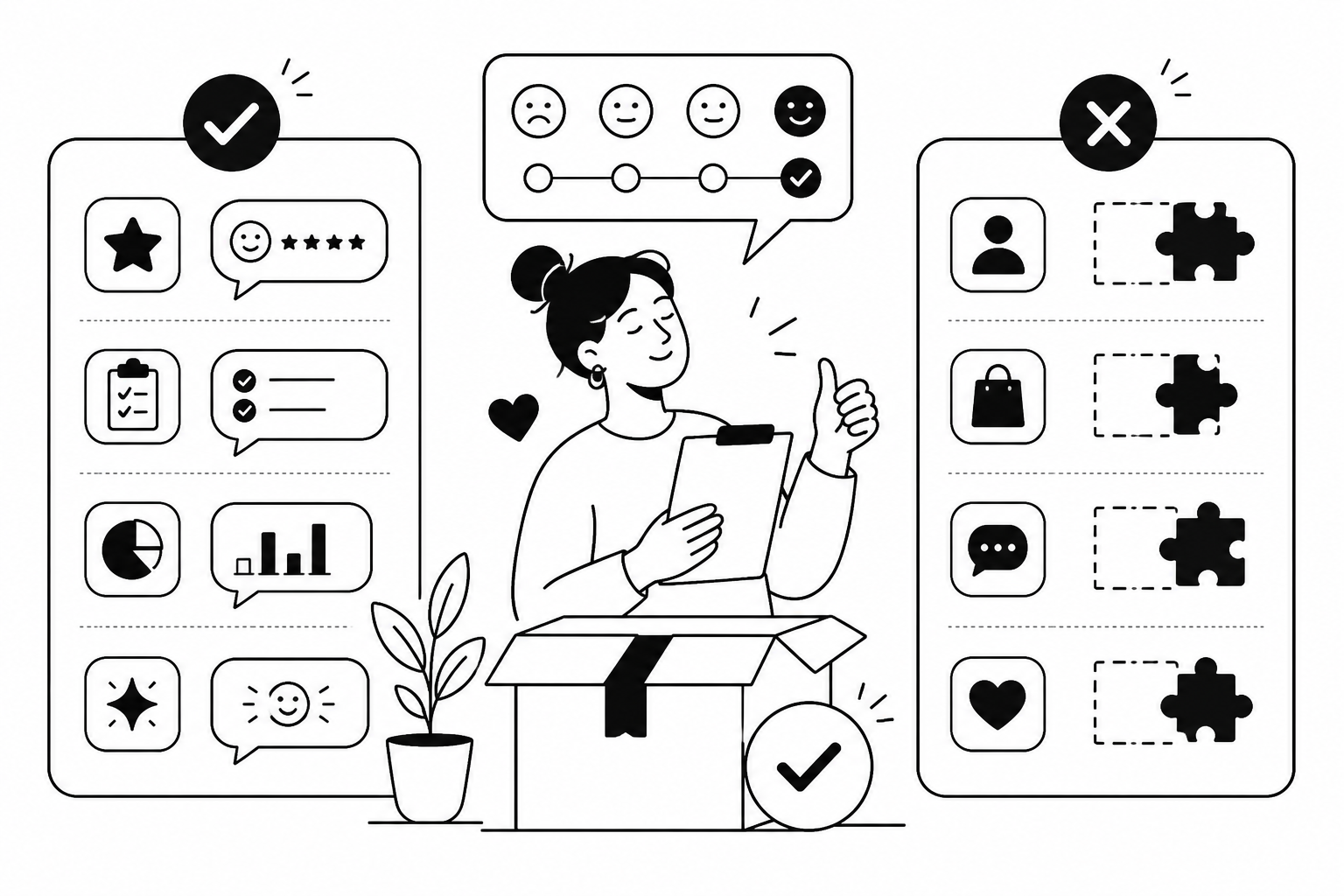
Post-purchase survey apps earn their place in a Shopify stack. They can tell a growth team which channel influenced an order, whether customers would recommend the brand, and whether a campaign is reaching the right audience—often while the purchase is still fresh.
The mistake is expecting the same survey to explain a decision. A “How did you hear about us?” response can credit TikTok; it cannot reveal that a customer bought because a creator’s before-and-after video addressed a concern they had hidden from every prior skincare brand.
Watch the 15-second AI interview demo
Why treating a post-purchase survey as customer research fails
Structured surveys measure patterns; they rarely explain the decision behind them. That is not a flaw in Fairing, KnoCommerce, Zigpoll, Okendo, or Grapevine. Each is designed to collect clean, comparable answers at scale, and that is exactly what attribution, NPS, and segmentation require.
The failure begins when teams turn a pick-list into a conclusion. “Fit” as a return reason might mean the garment ran small, the model photography set the wrong expectation, the customer ordered two sizes because the size guide was unclear, or the buyer simply changed their mind after seeing the fabric in person. Those are four different product and merchandising problems hiding under one label.
I saw this with a 14-person apparel brand using a standard post-purchase attribution survey and return dropdowns. Their dashboard said “fit” was the dominant issue, but eight follow-up customer interviews showed that six buyers actually distrusted the model sizing and bought defensively; the team rewrote the PDP fit guidance and reduced the volume of size-related support contacts without changing the product.
The best post-purchase survey apps for Shopify solve different measurement jobs
Fairing is the strongest choice for attribution at DTC scale
Fairing deploys short surveys on Shopify thank-you and order-status pages, with a Question Stream that can dynamically serve questions by demographics, product, or geography. It is best known for “How did you hear about us?” attribution tied to order and LTV data, and integrates with Shopify Flow, Klaviyo, and Google Sheets.
With 3,000+ DTC brands and typical response rates of 40–80%, Fairing is a sensible choice for brands that need marketing attribution at scale, not another generalized feedback program. If you are deciding whether it fits alongside interview-based research, see the full Usercall vs Fairing comparison.
KnoCommerce suits teams that need deeper attribution segmentation
KnoCommerce focuses on post-purchase attribution insights, channel analysis, and demographic segmentation. It offers 30+ ready-to-use survey templates, targeted audience filtering, advanced attribution models, and the option to embed a survey on the checkout screen or distribute it by link.
Its Shopify, Klaviyo, and Triple Whale integrations make it especially useful for a performance marketing team already working across those systems. KnoCommerce has a free plan and a seven-day trial, and I would shortlist it when attribution cuts by channel and audience matter more than broad feedback collection.
Zigpoll is the practical low-cost starting point for flexible surveys
Zigpoll is a fast, multilingual, no-code survey app covering post-purchase, pre-purchase, NPS, on-site, email, and SMS surveys. Its AI analytics insights and roughly 50% claimed average response rate give smaller teams a credible way to start collecting feedback without building a complex research operation.
The pricing is unusually accessible: a free plan includes 100 responses per month with no credit card, Basic is $10 per month for 1,000 responses, and Unlimited is $25 per month. Choose Zigpoll for a free or low-cost survey start, particularly when NPS is part of the immediate brief.
Okendo makes sense when surveys belong in a wider customer marketing platform
Okendo is a Shopify-focused customer marketing platform spanning reviews, loyalty, quizzes, referrals, and surveys. Its survey product supports post-purchase and on-site collection for zero-party data, so it is not merely an attribution add-on inside an otherwise disconnected stack.
Okendo serves 18,000+ merchants and reports a 15x average platform ROI. Pricing starts at $19 per month for Essential and reaches $499 per month for Advanced; it is best for brands that want surveys, reviews, and loyalty in one platform rather than separate point solutions.
Grapevine is the cleanest flat-rate option for Shopify-native survey operations
Grapevine is a Shopify-native app for post-purchase, NPS, CSAT, and attribution surveys. It lives inside Shopify admin, automatically connects to customer and order data, and integrates with Klaviyo, Google Sheets, and Shopify Flow.
Every plan includes unlimited responses, with a flat $25 monthly price and no tiers. That makes Grapevine a strong fit for teams that dislike response caps and want predictable survey costs without moving their workflow outside Shopify.
The shared gap is that structured answers cannot surface a customer’s real why
All five platforms are structured-answer tools. They excel at the what—product bought, satisfaction score, chosen channel—and the where of attribution. Multiple choice, dropdowns, NPS, CSAT, and attribution pick-lists create reliable data that a team can trend week after week.
But none captures the customer’s open-ended explanation: the objection that nearly stopped a purchase, the emotional trigger behind trust, or the real reason for a return beyond “not as expected.” A survey can show that 22% of buyers selected Instagram. It cannot reliably tell you whether they trusted a founder video, a comment thread, a friend’s tag, or a specific claim in an ad.
That distinction matters most on considered purchases. For a $12 impulse purchase, a clean attribution answer may be enough. For premium beauty, apparel, home goods, wellness, coffee subscriptions, pet products, baby products, gifts, or other high-AOV categories, the language behind the purchase decision is often more valuable than another dashboard slice.
Usercall fills the voice slot that survey roundups leave empty
None of the current best post-purchase survey app roundups—including vendor-published roundups—lists an open-ended voice or AI interview option. That is the empty slot: not a sixth survey app competing for the same checkbox, but a way to add depth after structured measurement identifies where to look.
Use surveys to measure. Use Usercall to understand why. Usercall runs short AI voice or text interviews after a purchase, cart abandonment, return, or repeat order. The AI asks follow-up questions based on what the customer says, rather than forcing everyone through a fixed question tree.
Surveys are useful for quick answers. Customer voice interviews are better when you need context, emotion, objections, and real customer language. Five to ten interviews can reveal why people bought, what almost stopped them, what built trust, why they abandoned, why they returned, and which phrases belong in ads, PDPs, and emails. See how this works for post-purchase customer interviews for DTC brands.
Add interviews when a number creates a decision the survey cannot answer
Keep Fairing, KnoCommerce, Zigpoll, Okendo, or Grapevine running if it delivers attribution, NPS, CSAT, or zero-party data your team uses. The better operating model is to use that data to select an interview cohort: first-time buyers from a new channel, customers who returned a specific SKU, repeat purchasers, or visitors who abandoned a high-value cart.
I ran this approach for a nine-person home-goods team after their survey showed a sharp increase in returns on one product variant. Their operations lead wanted a faster dropdown taxonomy; six conversational interviews instead exposed that customers expected a different finish from the product photos, and the team changed imagery before launching a costly packaging review.
The strongest triggers for adding customer interviews
- A high-AOV or considered purchase where customers compare options for days or weeks.
- A return or support spike with generic categories such as “fit” or “not as expected.”
- An attribution survey that identifies a winning channel but not the message that persuaded buyers.
- A brand already collecting NPS or CSAT that needs the experience behind a score shift.
- A PDP, offer, or retention program that needs customer language rather than internal assumptions.
The practical answer is to pair scale measurement with selective depth
What is the difference between a post-purchase survey and a customer interview?
A post-purchase survey asks standardized questions and produces comparable data across many customers. A customer interview is open-ended and follows the respondent’s specific answers, making it better for discovering motivations, objections, language, and unexpected causes.
Do I need to replace my survey app with Usercall?
No. Most brands should not. Keep the survey tool that gives you useful attribution or satisfaction data, then add Usercall for targeted interview batches when the numbers raise a question your survey cannot answer.
How many customer interviews should I start with?
Start with five to ten interviews around one focused decision, such as why a product is returned or why repeat buyers keep choosing one SKU. A small, coherent batch is more actionable than 50 unfocused conversations.
Are voice interviews only useful after a purchase?
No. They also work after cart abandonment, returns, repeat orders, support interactions, and other key product or customer moments. The best trigger is the moment when a behavior occurs and the customer can still explain it clearly.
Which Shopify brands benefit most from interview depth?
Brands selling considered purchases benefit most: beauty, apparel, home goods, wellness, subscriptions, pet products, baby and family products, premium gifts, and high-AOV products. The more trust, comparison, or expectation-setting involved, the more costly it is to rely on a dropdown alone.
Can interviews improve marketing creative and PDPs?
Yes. The strongest outcome is often the customer’s exact phrase for a fear, desired outcome, or reason to trust the brand. For stronger survey prompts before selecting an interview cohort, use this post-purchase survey questions guide for ecommerce brands.
Run the week on concept testing: 15 to 30 AI-moderated interviews, with quotes back in 48 to 72 hours.
Choosing a survey tool is only step one — the harder question is what you do with the answers once you have them. For a broader look at how to evaluate tools and vendors before you commit budget, check out our competitor comparisons guide, and if you want to go beyond checkbox attribution data, see how Usercall turns customer responses into real conversations.
Related: Concept testing questions · Concept testing research · CPG packaging · Concept testing examples
Related: Fairing alternative for teams that need more than attribution · Usercall vs Fairing: attribution vs customer voice · every user research tool alternative compared