
Market Entry Research Before You Launch Overseas
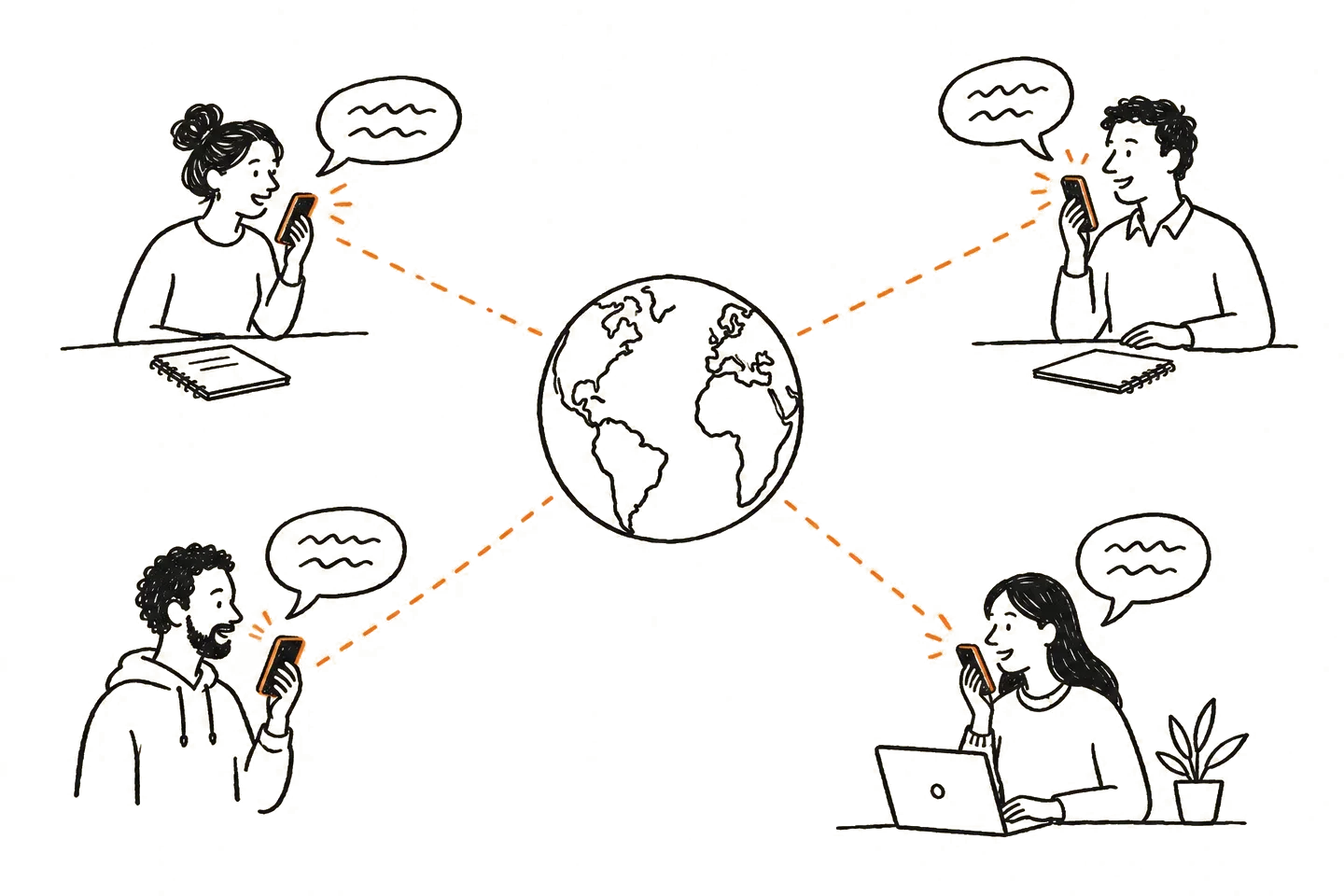
Short answer: Market entry research means talking to real people in the new country, in their language, before you spend on a launch. A typical range is 15-30+ interviews in that market, so the same reasons can show up more than once. That range is a plan, not a promised count, and it does not tell you the size of the market.
This is for brand, product, and agency teams deciding whether to launch in a country they do not already sell in. It covers what to learn, who to talk to, how many interviews to plan, how to recruit locally, how to compare markets, and what to do with the findings.
What market entry research is
Market entry research is the work of learning a new country from the people who live there, before you commit money to a launch. You are listening for reasons, words, and barriers. You are not estimating how big the market is.
Market research for international expansion, on this page, means those interviews. Run them before the offer, the price, and the channel are locked. A desk report can tell you that a category exists. It cannot tell you that people there read your claim as cheap, or that the person who pays is not the person who uses the product.
A market entry strategy starts with the research
A market entry strategy is the choice of whether to enter, with what offer, and how people will find it. International market entry is that choice for a country you do not already know. A new market entry strategy is the same choice written down for one country.
The research side is the part this page covers. Hear how people in that country already solve the problem, in their own words, before you lock the product, the price, the claim, or the channel. This page does not walk through a full business-school framework, and it does not cover legal setup or a scored model for picking countries. Those are separate jobs. The interviews tell you whether the offer you have makes sense to the people who would have to buy it.
What to learn before you spend
Keep one decision in view. What would make you launch, wait, or change the offer? Then ask about things a report will not say in the customer's words.
- What they already do. What they use today, what they pay, and what they gave up the last time they switched.
- Local competitors. Who already sells to buyers in that country, and what those buyers use today.
- Who decides. The person who uses the product and the person who pays are not always the same. Ask which one you are talking to.
- The words. How they name the product, the problem, and a good version of it. Launch copy has to survive those words.
- What does not travel. A claim, a pack, a price, or a channel that works at home can read as cheap, rude, or irrelevant in the new country.
- The barrier. What would stop them from trying it, in their own account, not from a checklist written at home.
Write the questions in plain language. Skip idioms and jokes. Someone in that country should be able to say the question out loud without first translating the tone.
Who to talk to
Talk to people who live in the country and who buy in the category now, or who stopped recently. If the buyer and the user are different people, talk to both, and keep those interviews separate so you do not mix their reasons.
A customer from a neighboring country is a different sample. So is a colleague who used to live there. Either one can help you write better questions. Neither one replaces a person who would meet the product in that market.
If you need the channel view, talk to a seller or a local partner in a separate interview. Do not treat what they say as the customer's account.
How many interviews per market
Plan 15-30+ interviews in each market. That is a typical range when you want the same reasons to come up more than once in one country. Count it per market. A total spread across three countries is not 15-30+ in each of them.
This is a planning range. It is not a promise that a study will finish at a set number. If the same hard barrier shows up in the first conversations, pause and change the offer or the question. Do not treat a short run as a picture of the whole country, and do not treat 15-30+ interviews as a market size, a share, or a forecast. If you need how many people would buy, that is a later measurement. The interviews tell you what is worth measuring.
How to recruit in the new country
Use people who live there. There are three routes.
- Your own list, when you already have customers, a waitlist, or an email list in that country. You invite them.
- A local partner's customers, only with the partner's permission, and only when those people match the buyer you care about.
- Panel recruiting. We can recruit participants for you, or you can bring your own. Recruiting reaches 95M+ people across our panel partners in 151 countries. Screen for the country, the language, and recent behavior in the category. That reach is not a completed study in every country.
Read a few people who did not qualify. If they passed because they travel there, or because they speak the language from somewhere else, the sample is not local. The page for recruiting is Recruit real participants for your research interviews.
How to compare markets
If you are choosing between countries, or checking whether a finding is local, run the same guide in each one. Keep the questions the same. Let each person answer in their language. Code every transcript against one codebook, then read what repeated in one market and did not repeat in another.
Do not average the markets into one international finding. A reason that shows up in one country and not the next is what the comparison is for.
For running one study across languages, see International Market Research Before You Launch. If you are choosing a firm that already fields work in many countries, see Global Market Research Companies. If you are entering one new country, the local firm directories are Top 20 Market Research Companies in India (2026): Who to Hire & Why, Top 20 Market Research Companies in Australia (Who to Hire in 2026), and Top 20 Market Research Firms in Singapore (2026 Buyer’s Guide).
What to do with the findings
Leave the interviews with four things the team spending the launch money can use.
- A decision. Launch, wait, or change the offer. Name the finding that drove it, and keep the quotes behind that finding.
- What must be local. Language, claim, pack, price cue, or channel. Keep the list short. If everything on it is local, you have not chosen yet.
- The words. Phrases people used for the problem and for a good product. Hand those to whoever writes the launch.
- What to measure next. Questions a later survey or a sales test could size. The interviews do not size them.
Have someone who knows the market read the themes before you present them. A summary can smooth out a meaning a local reader would catch.
How Usercall runs the interviews
Usercall runs AI-moderated interviews. A real person opens a link and talks one to one with an AI interviewer. They are told the interviewer is AI. You write the guide once. Each person picks a language at the start. See AI-moderated interviews in 50+ languages. Every plan includes every language.
Transcripts come back with themes coded for you, and each theme links to the quotes behind it. You can edit the codebook. We can recruit participants for you, or you can bring your own. Recruiting reaches 95M+ people across our panel partners in 151 countries.
Plans start from $89 a month or $899 a year. Pay-as-you-go options are available. Contact us for those details. Your first interview is free. See Pricing from $89 a month. Your first interview is free. Interview length is up to 12 minutes, 25 minutes, or 45 minutes, depending on the plan. Any plan can run an interview up to one hour on request. A longer interview uses more credits.
These interviews will not tell you market size, likely share, or whether a regulator will allow the product. They will not replace a local lawyer, a retail measurement firm, or an in-home visit. A local agency is still the better call for shop-alongs or a group in a room. AI-moderated interviews fit when you need one-to-one conversations in the local language, from a link, before you spend on the launch.
FAQ
What is market entry research?
Market entry research means talking to real people in the country you might enter, in their language, before you spend on a launch. It is there to learn reasons, words, and barriers. It does not estimate market size.
How is this different from a market entry strategy?
A market entry strategy is the choice of whether to enter, with what offer, and how people will find it. International market entry and a new market entry strategy are that same choice. The research comes first. This page does not walk through a full business-school framework.
How many interviews do I need in a new country?
A typical range is 15-30+ interviews per market, so the same reasons can show up more than once. Plan that number in each country, not as a total across countries. It is a planning range, not a promised count, and it is not a market size.
Can the interviews run in the local language?
Yes. Usercall runs AI-moderated interviews in 50+ languages, and every plan includes every language. You write the guide once. Each person picks a language at the start. Findings come back in English, so you can compare markets in one place.
How do I find people if I have no customers there?
We can recruit participants for you, or you can bring your own. Recruiting reaches 95M+ people across our panel partners in 151 countries. You can also use a local partner's customers when they match the buyer and the partner agrees. Reach across 151 countries is not a filled study in every country.
What does market entry research cost on Usercall?
Plans start from $89 a month or $899 a year. Pay-as-you-go options are available. Contact us for those details. Your first interview is free. Every plan includes 50+ languages. Recruiting is quoted for the audience and the study, not as a fixed interview count.
The study page for this is AI market research. Also see AI-moderated interviews in 50+ languages.
Usercall at a glance
Usercall is a self-serve AI-moderated interview platform. An AI moderator runs one-to-one voice interviews with real people, and every theme links back to the quotes behind it.
Real people, AI moderator.
Every participant is a real person. Only the interviewer is AI.
We can recruit participants for you, or you can bring your own. Recruiting reaches 95M+ people across our panel partners in 151 countries.
50+ languages.
Every plan includes every language.
Concept tests.
15-30+ interviews, back in 48 to 72 hours.