
Blog
Usercall Blog
Practical notes on AI-moderated interviews, qualitative analysis and customer research. How to talk to more of the right users, trace every finding back to who said it, and decide with confidence.

B2B Customer Journey Touchpoints: The Critical Moments That Actually Drive Deals (Most Teams Miss #3)
Stop mapping every interaction. Learn which B2B customer journey touchpoints actually drive conversion, adoption, and retention—and how to uncover the hidden ones killing deals.

Customer Experience Management in Banking Is Failing—Fix the Hidden Trust Gaps Costing You Customers
Most banking CX programs miss the real problem: broken trust moments. Learn how to fix customer experience management in banking with research-driven frameworks and real examples.

Customer Satisfaction Index Is Broken: How to Build One That Actually Predicts Churn, Retention, and Growth
Most customer satisfaction index models fail to predict real outcomes. Learn how to build a research-driven index that reveals why scores change—and what to fix to improve retention and growth.
17 Online Qualitative Research Tools (2026) — And Why Most Will Give You the Wrong Insights
Discover the best online qualitative research tools—and why most fail to deliver real insights. Learn the tools, frameworks, and expert workflows that actually improve decisions.
Net Promoter Survey Is Broken (If You Use It Like This): A Researcher’s Guide to Turning NPS Into Real Insight
Most net promoter surveys fail to deliver real insight. Learn how to design, analyze, and act on NPS with a research-driven approach that reveals the ‘why’ behind the score.

IT Customer Experience Is Failing—And Your Metrics Are Hiding It
Most IT customer experience programs track speed, not trust. Learn why common IT CX metrics fail and how to design experiences users actually trust and adopt.

Best Transcription Software for Qualitative Research in 2026 (Ranked by Research Use Case)
The best transcription tools for qualitative researchers in 2026 — ranked by accuracy, speaker labeling, timestamp quality, and how well the output works for analysis.

Grain vs Usercall: Call Capture vs Qualitative Intelligence at Scale
Grain clips and shares moments from individual calls. Usercall finds the patterns across hundreds of them. Here's when you need one, the other, or both.

Intercom vs Usercall: Messaging Layer vs Customer Intelligence Layer
Intercom handles customer messaging and support. Usercall analyzes what those conversations reveal — and triggers qualitative research from product events. Here's how they fit together.

Ethnographic Research: Methods, Examples, and How to Analyze Your Data (2026)
What ethnographic research is, the core data collection methods, how it differs from other qualitative approaches, and how modern teams use AI to analyze ethnographic data at scale.

Phenomenological Research: A Practical Guide for Qualitative Researchers (2026)
What phenomenological research is, how Husserl and Heidegger's approaches differ, how to conduct a phenomenological study, and how to analyze the data you collect.
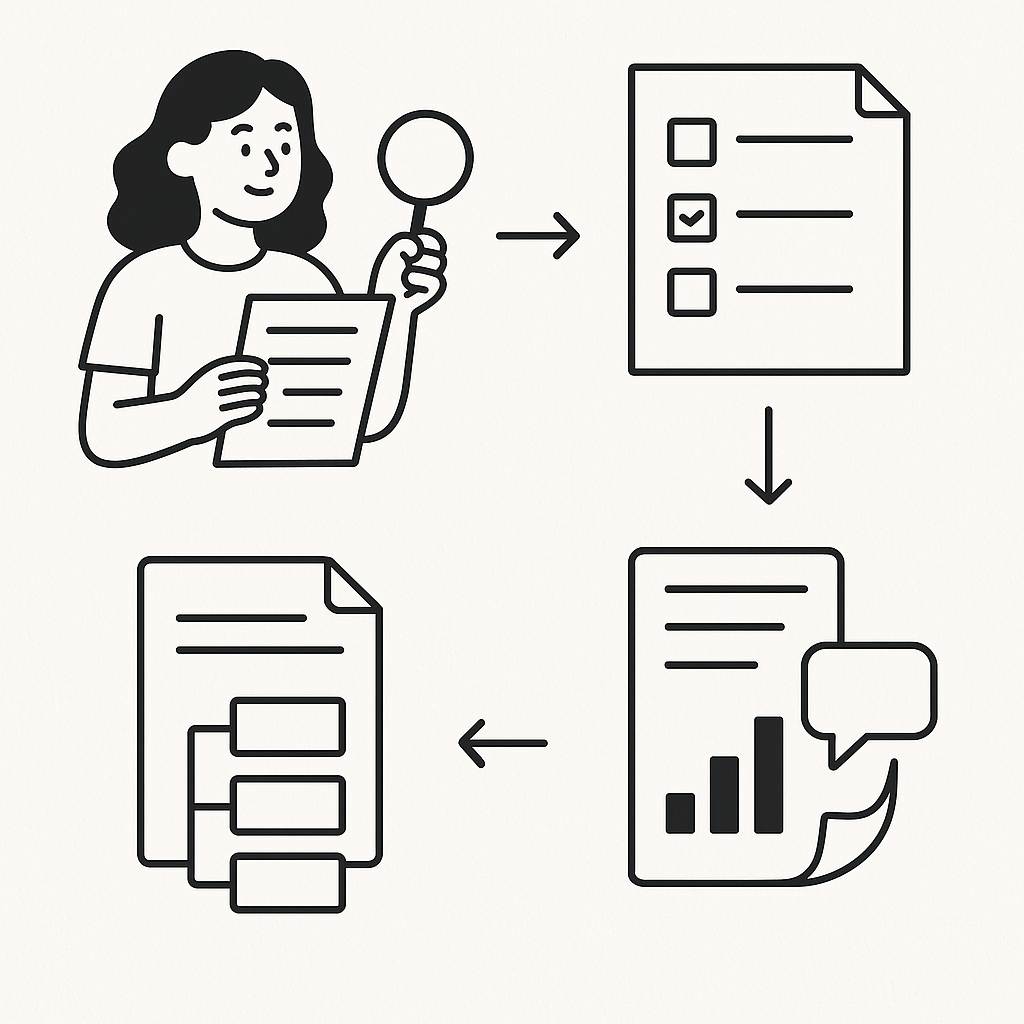
Content Analysis in Qualitative Research: A Step-by-Step Guide (2026)
How to conduct qualitative content analysis — the three types, how to build a coding framework, how to ensure reliability, and where AI speeds up the process.

Structured Interview: What It Is, When to Use It, and How It Compares (2026)
Structured interviews use fixed questions in a set order — here's when that's the right choice, how to design one, and how it differs from semi-structured and unstructured formats.

Purposive Sampling: A Complete Guide for Qualitative Researchers (2026)
What purposive sampling is, the 7 types, when to use it over random sampling, and how to determine sample size — a practical guide for qualitative researchers.

ResearchRabbit Review 2026: What It Does Well and the Gap Most Qualitative Researchers Hit
ResearchRabbit is free and genuinely useful for literature discovery — but it stops before you analyze your own qualitative data. Here's an honest review and what to use alongside it.

Semi-Structured Interviews: A Complete Guide for Researchers (2026)
What semi-structured interviews are, when to use them, how to design a guide, and how AI can analyze results at scale — a practical guide for research teams.
Market Research for New Product Development: Why Most Teams Get False Positives (And How to Find Real Demand)
Struggling with market research for new product development? Learn why most validation is misleading—and a proven research framework to uncover real demand before you build.

Marvin Pricing 2026: Free Plan (5 AI Interviews/mo), Standard & Enterprise Custom
Marvin offers a permanent free plan with 5 AI interviews/month and 5 files. Standard and Enterprise require contacting sales. Full breakdown of what research teams actually pay.

Mixpanel Pricing Official 2026: When to Leave Free Plan
Mixpanel is free up to 1M monthly events with unlimited seats. Growth starts at $0.28 per 1,000 events. Enterprise is custom. Full event-based billing breakdown and cost traps.

Amplitude Pricing 2026: Free Plan, Plus, Growth, Enterprise
Amplitude's free plan covers 2M events a month. Plus is usage based. Growth and Enterprise are custom quotes. See what teams really pay and where costs jump.

Best Thematic Analysis Tool for Dissertations in 2026
The best thematic analysis tools for dissertations in 2026 — from NVivo to AI-powered alternatives. Cut analysis time without sacrificing academic rigor.

How to Analyze Open-Ended Survey Responses (Without Reading Every One)
Learn how to analyze open-ended survey responses at scale — AI-powered theme extraction, coding, and synthesis without manual reading. Get insights from 50 or 5,000 responses.

The Best Thematic Analysis Software in 2026 (And Why Most Get It Wrong)
The best thematic analysis software in 2026 — from manual coding tools to AI that generates themes automatically. Honest comparison for researchers and product teams.

The Best Qualitative Coding Software in 2026 (Tested by a Researcher)
The best qualitative coding software in 2026 — from manual QDAS tools to AI-powered analysis. Honest comparison of what actually cuts coding time without losing rigor.