
Focus Group Research: Why It Keeps Failing Teams (And What Actually Works)
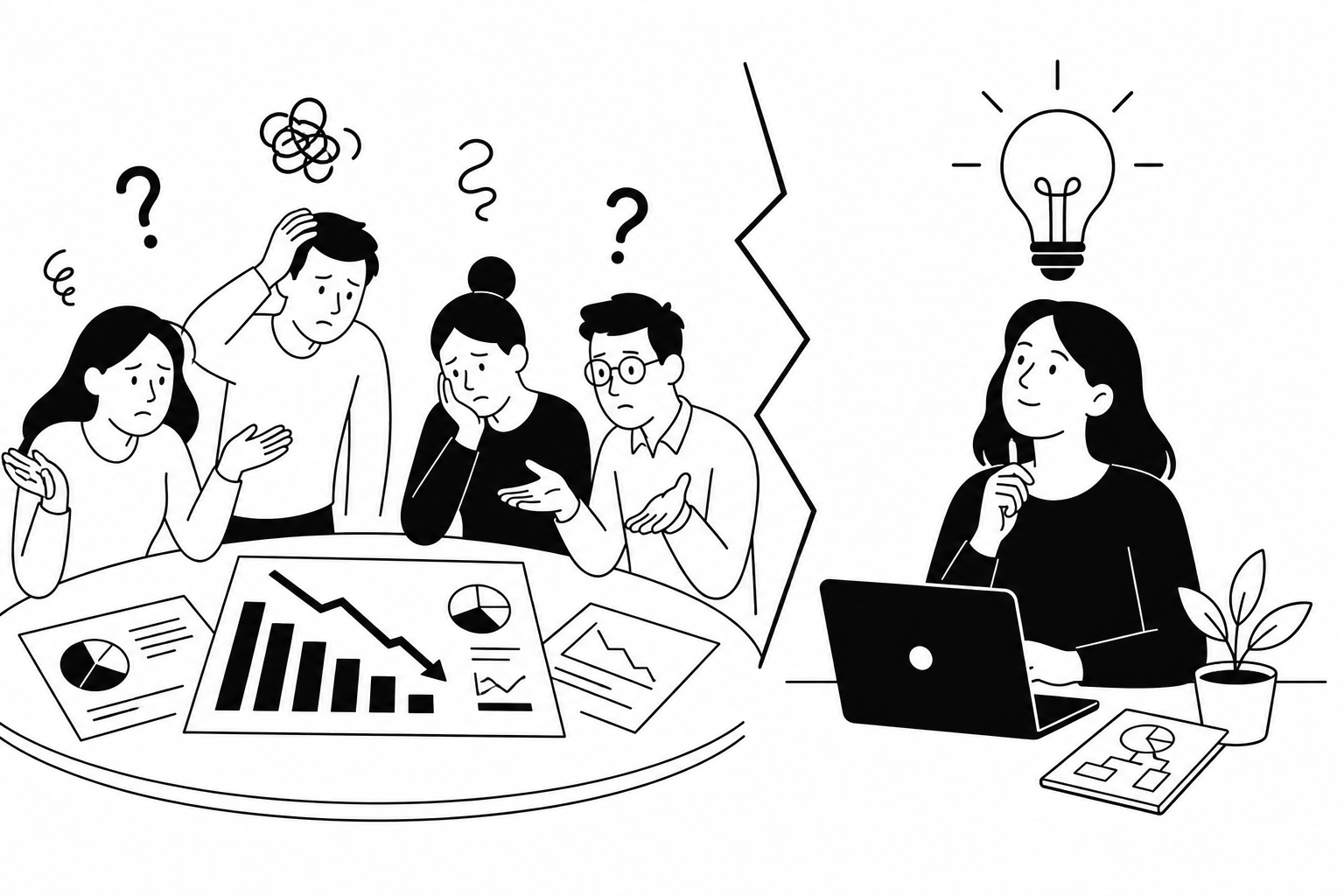
I sat in the observation room behind a one way mirror watching eight strangers nod along to a product concept that, six months later, flopped in market. Everyone in that room agreed the idea was "interesting" and "something they'd consider." Nobody bought it. That session cost the client eighteen thousand dollars and it told them almost nothing true. I have run and observed hundreds of these sessions over the last decade, and the pattern repeats so often it stopped surprising me years ago: focus groups are excellent at producing consensus and terrible at producing truth.
That is not an argument against qualitative research. It is an argument against how most teams run focus groups. The method itself can work. But the way it gets executed, rushed recruiting, a facilitator who wants everyone to like them, a room dynamic that rewards agreement over honesty, turns a research tool into a groupthink machine. This piece breaks down exactly where focus group research goes wrong and what to do instead, based on what I have seen work across dozens of studies.
Why Most Focus Groups Produce Polite Lies, Not Insight
The core failure mode of focus group research is social pressure. Put six to ten people in a room, add a facilitator who needs the client to feel the session went well, and you get a dynamic where dissent feels rude. I have watched participants visibly change their answer after the first two people in the circle said something positive. That is not bad luck. It is the predictable output of group dynamics, and it is why so many teams walk away from sessions with a false sense of validation, a problem I break down in detail in why nods in a focus group don't equal actual demand.
The mistakes compound from there. Leading questions, dominant personalities hijacking the conversation, moderators who summarize what they think participants meant instead of what they actually said. I catalog the most common and costly versions of this in the seven mistakes that turn focus group research into polite lies and again from a slightly different angle in how qualitative research sessions collapse into groupthink. If you want the unfiltered version of why teams keep getting misled by their own research, read the brutal truth about why most focus groups mislead teams. And if you have ever suspected your paid respondents were giving you what they thought you wanted to hear rather than what they believed, you are probably right, which is the exact problem covered in why respondent focus groups lie to you and how to fix it. And increasingly, teams are questioning whether the format is even worth saving, a debate I take head on in what top researchers do instead of traditional focus group qualitative research.
Recruiting Participants Who Won't Mislead Your Team
Bad recruiting is the single biggest predictor of a wasted research budget. I have seen recruiters fill an eight person session with five professional respondents who do this every month for extra cash, people who have learned exactly what facilitators want to hear. They are not lying maliciously. They have just been trained by the process to perform a good respondent instead of being an honest one.
Screener design matters more than most researchers admit. A screener that asks "do you use this type of product" instead of verifying actual recent behavior lets in people who technically qualify but have no real stake in the topic. I walk through how to build screeners and vet participants properly in how to recruit a focus group panel that won't mislead your team, and the recruitment failure patterns specifically in the seven recruitment mistakes that ruin focus group results. On the participant side, if you are the one being recruited and want to actually get selected for legitimate paid studies rather than scam panels, that process is covered in the smarter way to get selected for paid focus group opportunities, and the full cost and recruiting breakdown for paid sessions is in what paid focus groups actually cost and why most waste the budget.
The Moderator Is the Whole Session
I have sat in on sessions run by two different facilitators using the identical discussion guide, same participants, same client, and gotten wildly different quality of insight. A weak moderator lets the loudest voice in the room set the tone for everyone else. A strong one knows when to sit in silence for four uncomfortable seconds after a shallow answer, because that silence is often what produces the real one.
This is the part clients underestimate when they hire based on price. A cheap moderator who reads questions off a script will get you a transcript. An experienced one will get you the thing underneath the transcript. I go deep on this distinction in the difference a good focus group moderator makes versus a room full of polite nods and the number one reason your facilitator is misleading your team. And because I get asked this constantly, I broke down real market rates in what it actually costs to hire a focus group moderator and where the 15k mistake happens.
Facilities and Logistics That Quietly Sabotage Research
Before you even get to the conversation, the physical setup of a session can bias what you hear. I once ran a study in a facility so obviously set up as a "research lab," complete with a visible mirror wall, that half the group spent the first fifteen minutes performing for an audience they knew was watching. The room itself changed the data.
Location, layout, recording setup, even how the waiting room is staffed, all of it shapes participant comfort and honesty. I cover the specific failure points in seven costly focus group facility mistakes that ruin research before it starts, the questions to ask before booking anything in what to ask before booking a local focus group facility, and how these problems multiply when you add travel and on location fieldwork in the fieldwork focus group mistakes that turn research into polite noise.
Virtual Focus Groups Solve Some Problems and Create New Ones
Moving sessions to Zoom fixed the geography problem. It did not fix the honesty problem, and in some ways it made new ones. I have moderated calls where half the participants had their cameras off, which flattens body language cues a good facilitator relies on to know when someone is holding back.
Done well, virtual sessions can actually outperform in person ones because participants are in their own space, less performative, more relaxed. Done poorly, you get technical chaos and disengaged participants scrolling their phone off screen. The practical playbook for running these correctly is in how to run a Zoom focus group that delivers real insights instead of polite opinions and the specific hidden mistakes in the hidden mistakes ruining your Zoom online focus groups. For a fuller checklist across formats, I put together thirteen virtual focus group best practices that stop polite feedback. And if you are wondering whether the digital format is worth it at all compared to newer research methods, that question gets a direct answer in why digital focus groups don't work unless you change this one thing.
What Focus Group Research Actually Costs
Teams routinely underestimate the true cost of a focus group program because they only budget for the session itself and forget recruiting, incentives, facility rental, moderator fees, transcription, and analysis time. Here is a realistic breakdown based on studies I have run or priced out recently.
| Cost Component | Typical Range (Per Session) |
|---|---|
| Participant recruiting and screening | $1,500 to $3,500 |
| Incentives (8 to 10 participants) | $800 to $2,000 |
| Facility rental (in person) | $500 to $1,500 |
| Moderator fee | $1,500 to $5,000+ |
| Transcription and analysis | $500 to $2,000 |
| Total per session | $5,000 to $15,000+ |
Multiply that across the three to five sessions most studies require to reach any kind of pattern, and you are easily at fifty thousand dollars for a study that, as I covered earlier, may still leave you with polite consensus instead of real signal. Some services position themselves as a cheaper shortcut into this world, and I looked closely at one of the bigger names in the hidden trap in Apex Focus Group style panels and what to do instead. The trap is usually the same one: low cost recruiting that trades quality of insight for speed of fill.
Focus Groups vs Every Other Research Method
The question I get asked most by product and research teams is whether focus groups are even the right method to reach for. The honest answer is that focus groups are good for exploring reactions to concepts in a social context and bad at almost everything else people use them for, including validating pricing, uncovering individual pain points, and predicting purchase behavior.
One on one interviews consistently outperform group settings for depth and honesty, because there is no audience to perform for. I broke down when to choose which format in interviews versus focus groups and how to choose the right method, and the specific ways teams misuse group interviews in the number one research method teams misuse and how to get real insights instead. On the market research side specifically, I cover why agencies keep defaulting to focus groups despite the flaws in why market research teams keep paying for polite answers and why market research focus groups fail and how to get honest customer insight instead. To be fair to the format, it does get some things right, which I acknowledge in what market research focus groups still get right and why teams are moving on anyway.
Specialized Contexts Where Focus Groups Get Used and Abused
Certain industries lean on focus groups constantly and get burned by the same mistakes in slightly different clothing. Food and beverage companies run taste and concept panels that produce enthusiastic verbal feedback and then watch the product fail at retail, a gap I unpack in the food focus group mistakes that make consumers say yes and never buy. Academic and clinical researchers face a different version of the same social desirability problem, which I address in how to get honest insight from a focus group in psychology research instead of groupthink.
Foresight and trend teams have their own blind spot, chasing what participants say they want in the future rather than what current behavior actually predicts, covered in how foresight focus groups uncover customer truths surveys miss. Product teams running concept testing groups face the classic feature request trap, addressed in how product focus groups avoid polite feedback and find what customers actually think. And the terminology itself gets confusing across academic and commercial contexts, which I clarify in how a focused group in research design gets honest insight instead of polite agreement.
How to Actually Run One That Works
If you are going to run a focus group despite everything above, do it deliberately. Cap the group at five or six, not eight or ten, so quieter participants can't hide. Separate strong personalities into different sessions rather than letting them dominate one room. Ask the facilitator to probe every "that makes sense" or "I could see myself using that" with a direct follow up: when was the last time you actually did something like this. Vague future intent statements are the biggest false signal in group research, and a trained moderator should never let one pass unchallenged.
I turned this into a full playbook in how to conduct a focus group that actually produces insight instead of just opinions, and made the broader case for what most teams get structurally wrong in why most teams get the focus group wrong and how to get insights that change decisions. The teams that get real value from this method treat it as one input alongside individual interviews and behavioral data, never as the sole source of truth.
Where Usercall Fits In
Most of the failure points above trace back to one root cause: a room full of people watching each other's reactions instead of speaking freely. Usercall runs AI moderated one on one voice interviews at scale, so you get the depth of a skilled individual interview without the social pressure of a group, without booking a facility, and without the five figure agency invoice. Themes get linked directly to the actual quotes that generated them, so you can see the evidence behind every insight instead of trusting a summary slide. If your team is tired of paying for polite consensus, try running your next study on Usercall instead.